

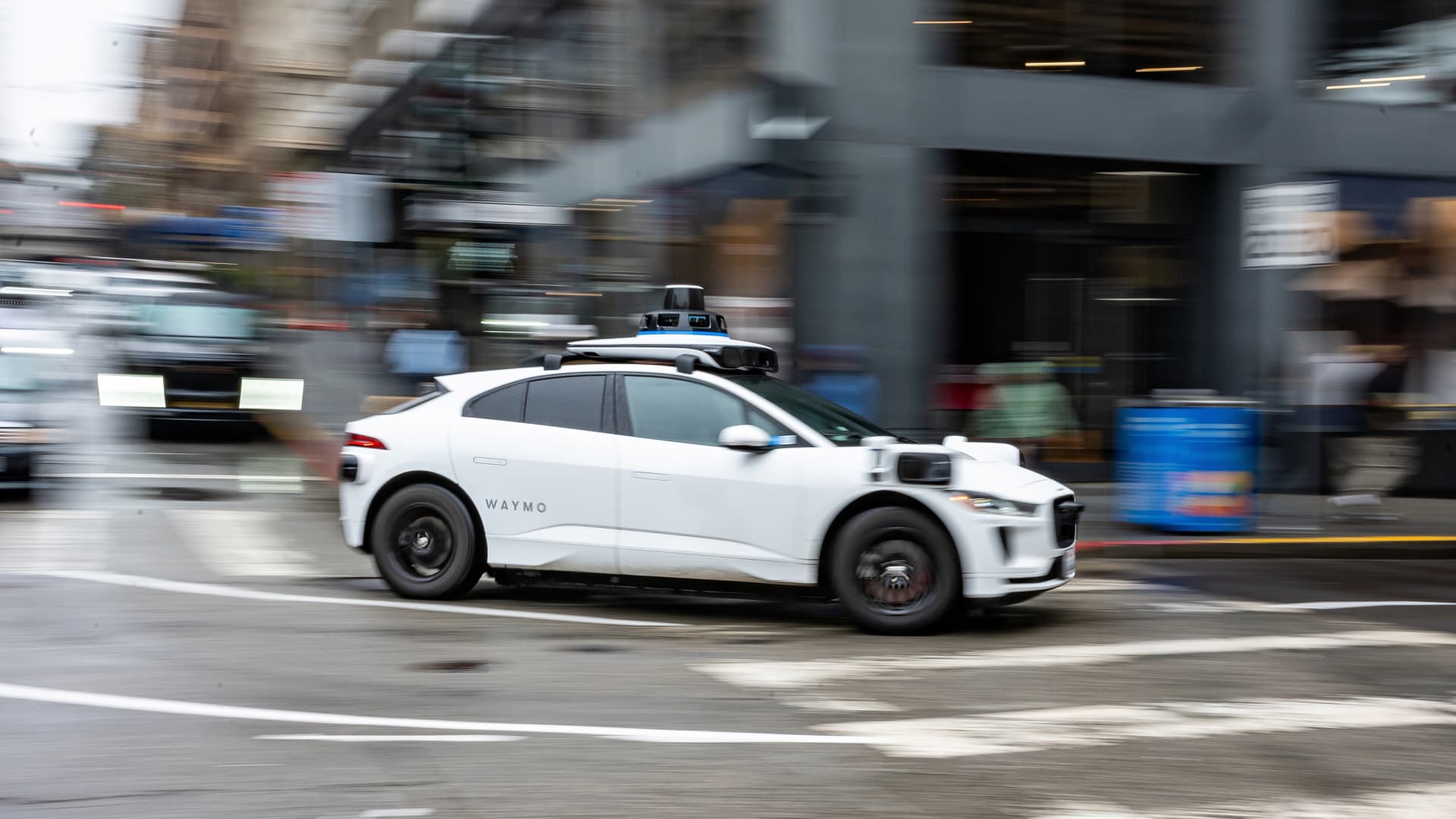
On Wednesday, December 17, 2025, a Waymo self-driving taxi pulls into Post Street in San Francisco, California, USA.
David Paul Morris | Bloomberg | Getty Images
Waymo on Thursday suspended its robo-taxi service in the San Francisco Bay Area ahead of expected heavy rain in the region, according to a notice to customers of the company’s driverless ride-hailing app.
“Service temporarily suspended due to National Weather Service flash flood warning,” the notice said.
The Alphabet company announced earlier this week that it would update its fleet to better run its robotaxi service during power outages.
On December 20, Waymo temporarily suspended service during a power outage in San Francisco that left tens of thousands of people in the area without power and caused some self-driving cars to stop in the middle of traffic, contributing to or causing congestion.
The National Weather Service has extended a flood watch for the entire San Francisco Bay Area until 10 p.m. local time Friday.
Waymo did not immediately respond to a request for comment or say whether regulators had asked it to suspend service Thursday in light of flash flood warnings.
The California Public Utilities Commission, which regulates driverless ride-hailing services in the state, did not immediately respond to a request for information Thursday over the Christmas holiday.
Waymo currently operates commercial unmanned services in five U.S. markets, increasing to three by the end of 2024. Waymo’s robotaxi service is operating in Austin, the San Francisco Bay Area, Phoenix, Atlanta, and Los Angeles this year. The company plans to significantly expand its service area across the United States and outside the United States in 2026, CNBC previously reported.
Waymo faces increased public scrutiny and safety concerns as it seeks to expand its robotaxi service.
Jeffrey Tumlin, former CEO of the San Francisco Metropolitan Transportation Authority, told CNBC that regulators and robo-taxi companies can learn valuable lessons from the disruption that occurred with Waymo vehicles during last week’s PG&E power outage.
“I think we need to ask, ‘How many (self-driving cars) is it reasonable to have on city streets, depending on time of day, geography, and weather?'” Tumlin said. He also suggested regulators may want to create a tiered system that would allow self-driving car companies to scale up quickly, provided they meet certain tests.
One of those tests, he said, is how quickly companies can safely move self-driving cars out of the way of traffic when they encounter disruptions, such as four-way intersections where traffic lights aren’t working.
Tumlin said cities and regulators need to seek more data from robotaxi companies about their vehicles’ planned and actual performance during anticipated emergencies such as power outages, floods and earthquakes.
