

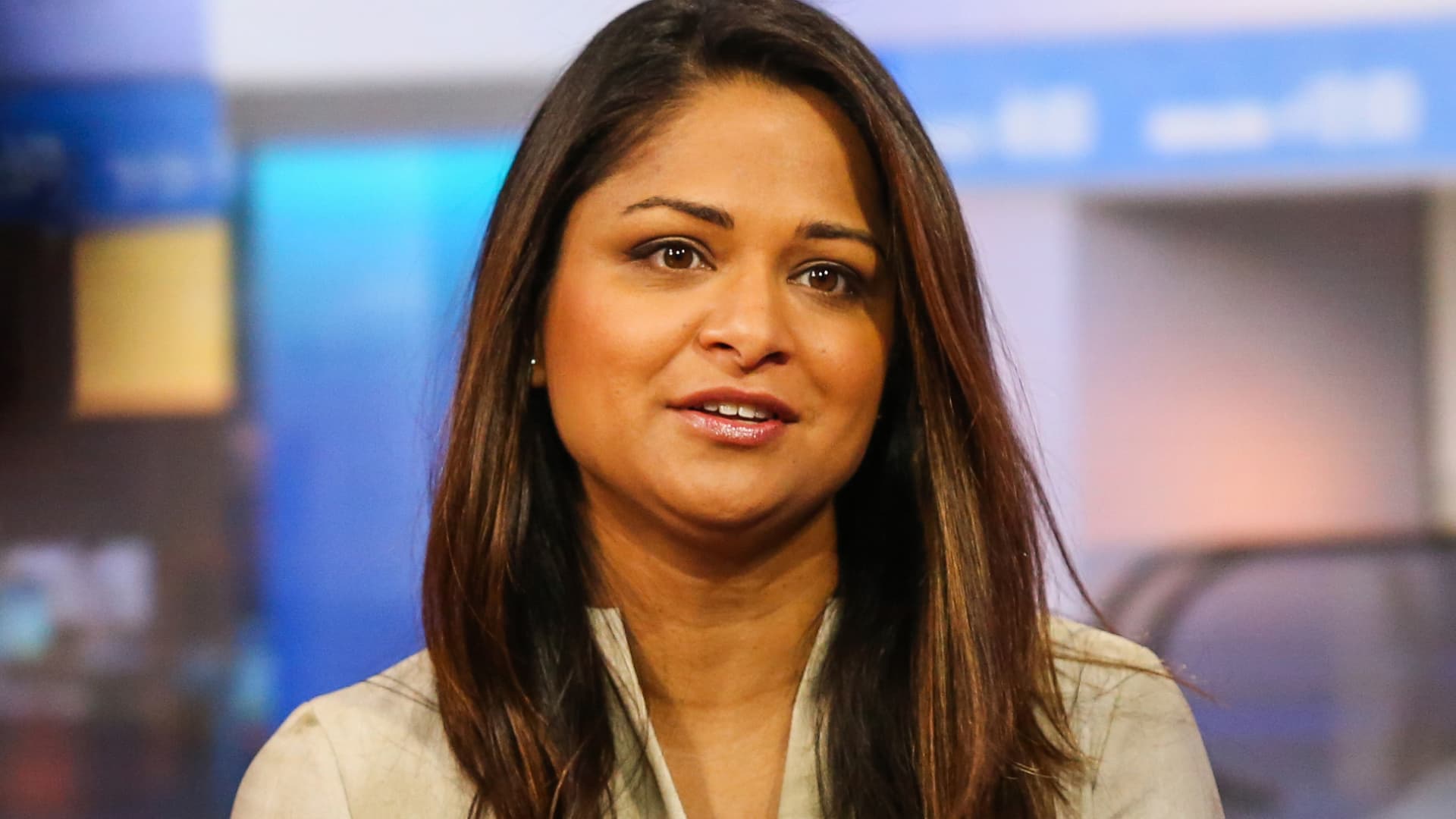
Savita Subramanian of Bank of America Securities just released her most bearish outlook for 2026, based on early calculations from CNBC. The firm’s head of U.S. equities and quantitative strategy expects the S&P 500 to finish at 7,100 next year, a target that would mean the overall index would rise just 4% from current levels. Friday’s closing price for the S&P 500 was 6,827.41. At one point last week, it closed above $6,900 for the first time in history. “I think this is a year where we’re going to see a lot of multiple compression,” Subramanian said Monday on CNBC’s “Squawk Box.” “The reason is that the S&P stocks that currently make up the majority of the market are not economically sensitive companies,” she continued. “These are the very AI plays, the dream-buying companies, and the companies that we see heading into a bit of an air pocket in 2026.” This view is at odds with many other strategists on the street who expect artificial intelligence to remain in a bull market for another year. Oppenheimer’s John Stoltzfus is the most bullish to date, predicting the S&P 500 could rise to 8,100 next year. Deutsche Bank’s Binky Chadha estimates the number to be 8,000. Fundstrat’s Tom Lee also said the S&P 500 index will rise to 7,700 in 2026, adding that a “wall of fear” among investors is providing a tailwind for the market. But Subramanian expects the recent decline in tech stocks to continue into next year, when AI is likely to start entering the labor market. This means a broader range of consumers will begin to suffer, beyond the low-income groups that have traditionally borne the brunt of the economic downturn. “Where we are now is really choosing sides,” Subramanian said. “So AI stocks are all this and that, but if that’s the case, AI stocks are going to take away a lot of jobs. That means the consumption landscape could change next year. So I’m just pricing in the best of everything right now. As a result, in a divergence from the consensus, BofA Securities strategists recommend that investors be overweight consumer staples and underweight consumer discretionary stocks.
