

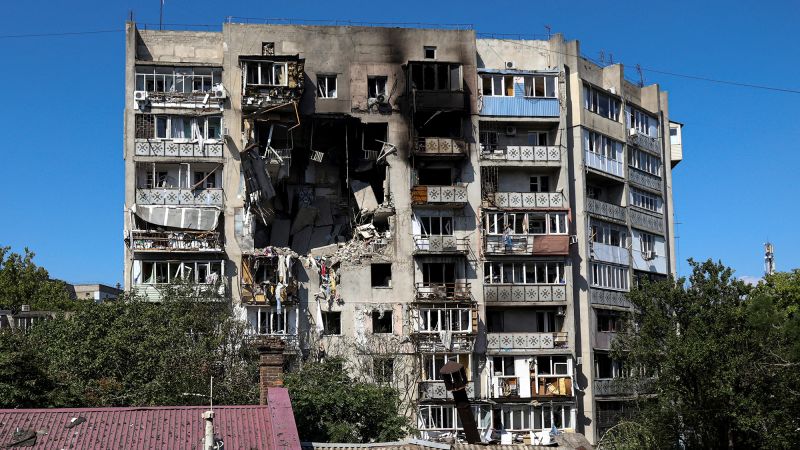
A secret Russian unit based in Moscow has transformed the landscape of drone warfare, turning what was an advantage for the Ukrainians into a vulnerability.
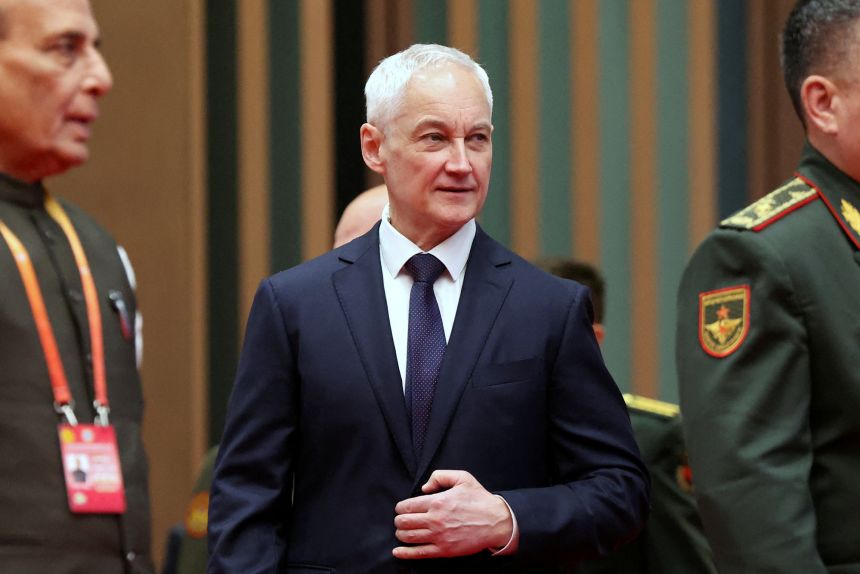
The force, known as Rubicon, has expanded rapidly under Russian Defense Minister Andrei Belousov since he took office in June last year. According to a video published by official Russian media, Belousov visited the company’s headquarters in October 2024 and was shown various drones under development.
The emergence of Rubicon (officially known as the Rubicon Center for Advanced Unmanned Technologies) is a perfect example of how the Russian military learned to shake off its rigid fighting style and adapt to a rapidly evolving battlefield during the Ukraine conflict.
Ukraine had already established a separate branch within the military, the Unmanned Systems Army, in mid-2024.
As Rubicon proved its worth, Russian President Vladimir Putin announced in June that Russia would establish a military command dedicated to “unmanned aircraft systems.”
The unit was born last week.
“A head of unmanned systems has been appointed, and a military command and control body has been established at all levels,” said Deputy Commander-in-Chief Colonel Sergei Ishtuganov.
“Only a year ago, our armed forces were not so saturated with all kinds of drones. But gradually Russian military units managed to change the course of the sky,” he told Russian daily kp.ru.
“We are staffing these units with operators, engineers, technicians and other support specialists,” Ishtuganov added, a clear sign that resources are being dedicated to the command.
It also has a unique coat of arms featuring a cross of arrows and a sword, with a microchip in the center featuring a star and wings.
Rubicon does more than just design and deploy drones. We develop and test advanced robotic systems and AI.
It pioneered the use of fiber optic drones and had a huge impact on the battlefield. These are controlled via fiber optic cables and provide a secure video feed in real time, free from interference.
It also improves the performance of other units.
“Rubicon formations remain a major problem for (Ukrainian) drone operators, not only because of the drone companies themselves, but also because they train other Russian drone forces,” said Michael Koffman, a senior fellow at the Carnegie Endowment.
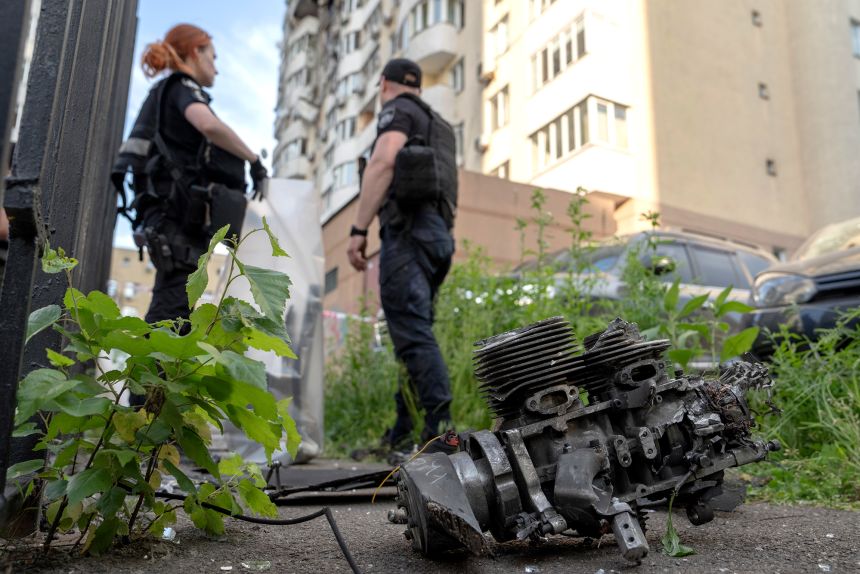
Within months of Rubicon’s establishment, its forces deployed to the front lines with a new generation of unmanned vehicles and turned the tide against the Ukrainian military.
Their involvement was first known inside Russia after Ukrainian forces invaded and captured parts of the Kursk region last summer. Shortly after Rubicon appeared in the region, the Ukrainian military reported that a drone strike had almost completely cut off its supply lines.
Ukrainian forces withdrew from the area earlier this year. Two commanders later told CNN that well-trained Russian forces suddenly turned the fight and cornered Ukrainian logistics and drone operators. At the time, they didn’t know Rubicon was being deployed.
Since then, Rubicon units have been reported in many locations on the battlefield, often giving Russian forces an advantage by attacking Ukrainian supply routes and enemy drone operators from well behind the front lines.
In August, the commander of Ukraine’s 93rd Brigade Battalion told CNN that the Rubicon unit was integrated with a Russian brigade in the Kostyniivka district of Donetsk region.
Within a week, he said, his unit had lost most of its vehicles, drone launch sites, antennas and communications equipment. Since the early days of the war, Russia has sought to target Ukrainian drone operators. The Rubicon unit takes it to a new level.
Mick Ryan, a military analyst who recently visited Ukraine, said the conflict is currently a “saturated drone operating environment.”
Ryan said he was told by front-line officers that Russian drone technology is probably now slightly more innovative than Ukraine.
“Vehicle movement is difficult or impossible within 15 kilometers (9 miles) of the front line. Infantry must march 10 to 15 kilometers (6 to 9 miles) to their positions,” Ryan said.
“If armored vehicles and artillery are deployed, each platform can be attacked dozens of times a day,” said Ryan, author of the blog Futura Doctrina. “To avoid detection and destruction by Russian drones, all headquarters are now buried deep underground.”
“Today, it is the drone pilots who shape the modern battlefield and are the architects of victory. It is the drone pilots who, to a large extent, ensure the advance of the infantry,” the Russian Telegram channel “Lost Armor” wrote, posting a nearly five-minute video of destroyed Ukrainian military armor in the Pokrovsk region.
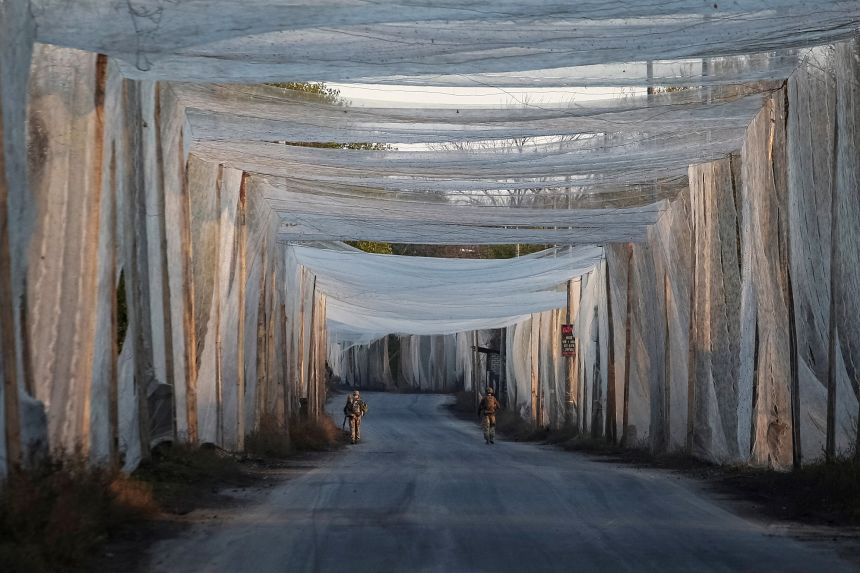
The Ukrainian military has set up nets on roads and railways behind the front lines to capture Rubicon drones, but their effectiveness is limited given the vast size of the fighting area.
Rubicon was also innovative in developing a radar network to shoot down Ukrainian drones.
“They captured all our main types of unmanned aerial vehicles as trophies,” says Ukrainian electronic warfare expert Serhiy Beskhrestnov. “Of course, they studied all the electronics, the communication systems inside the UAV, the navigation systems.”
Rubicon also appears to have been involved in the first successful use of a Russian naval drone, which crashed into a Ukrainian ship in the Danube estuary in August.
Two weeks ago, Rubicon claimed to have captured a Ukrainian naval vessel moored at a gas production facility in the Black Sea.
Rubicon forces are so important that Ukrainian security services are currently intensively searching their forward bases. Earlier this month, a drone attack on a Russian base in occupied Avdiivka destroyed Rubicon’s headquarters, according to Ukraine’s Defense Intelligence Service.
A Ukrainian drone unit from the 71st Jaeger Brigade recently posted a video showing attacks on Sumy’s antennas and hideouts, saying it belonged to “Russia’s elite Rubicon unit.”
“We will find, search and attack antennas, satellite communications terminals and trenches,” said the force’s commander, Vladislav. They detected takeoff points and intercepted radio communications to establish the presence of Rubicon forces, he said.
Vyacheslav told CNN that while the two countries had similar capabilities, Russia had the advantage in terms of the number of fiber-optic drones it produced.
“The availability of these drones, how many drones they can launch, and how many we can launch. That’s the big difference.” And now there are more Rubicon operators, he said.
The conflict in Ukraine is increasingly one of countermeasures aimed at overcoming or neutralizing enemy innovation. It’s a constant battle between drones and electronic warfare that can detect, jam, and impersonate enemy drones.
“The enemy will tamper with the frequencies. We will reconfigure the electronic warfare systems. The enemy will begin to suppress us with electronic warfare. We will switch to other frequencies,” Russian commander Ishtuganov said.
Adaptation never ends.
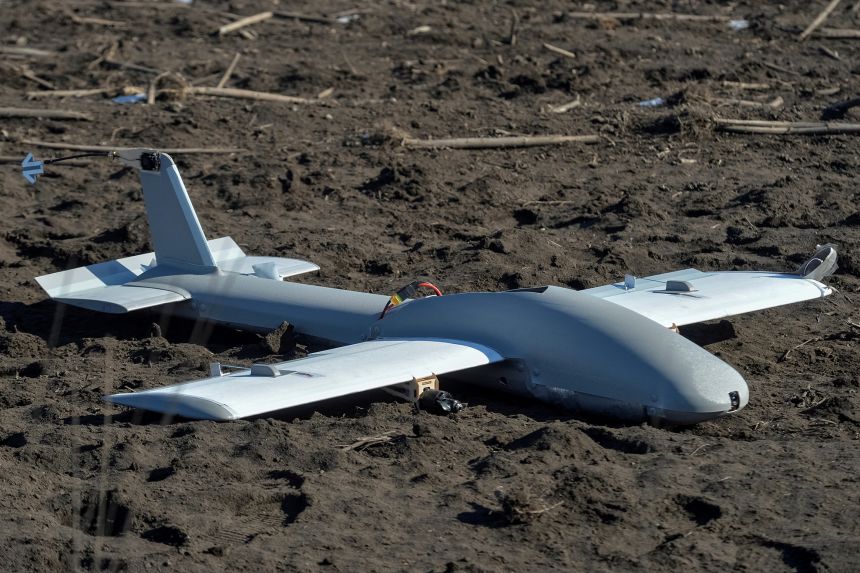
Rubicon’s arsenal includes the Molniya drone, a relatively simple drone made primarily of plywood. The second generation of Molniya (Russian for lightning bolt) carries a payload of up to 7 kilograms (15 pounds) and can fly behind the front lines to depths of more than 30 kilometers (19 miles). It can also act as a “mother ship” that fires two first-person view (FPV) weapons, making movement along critical routes much more difficult, as CNN discovered in August.
As soon as the Ukrainians captured Molniya, they began copying and improving its design. They have also developed a new drone, the FP-2, that can attack Rubicon command centers at least 20 kilometers (12 miles) from the front line.
Early in the war, the Russian military was often ridiculed in the West for its harsh tactics, poor equipment, and mediocre leadership. That has changed.
In a major change, the Russian military has begun hiring emerging manufacturers like St. Petersburg’s Orko Design Bureau, which makes two types of drones now widely used in combat. Mr. Oko is under sanctions from the United States.
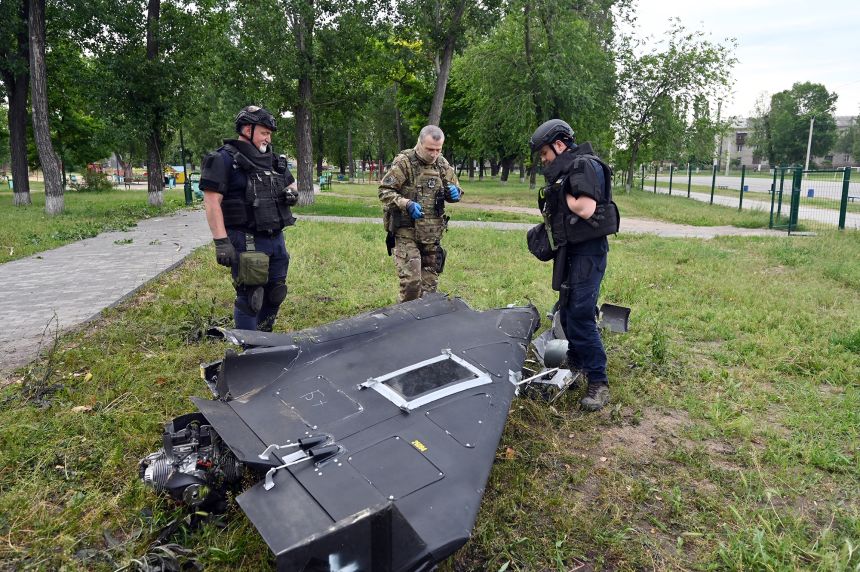
The introduction of Russian military innovations makes Russia a “more dangerous adversary for Ukraine, as well as a far more capable and dangerous force that threatens Europe,” according to a new analysis by the Special Competition Research Project, a US think tank.
The world Rubicon and its supporters envision “will soon feature autonomous drones that can overwhelm enemy defenses, microdrones that are difficult to identify and stop, and swarms of drones that imitate birds, insects, and other wildlife,” said military analyst Dara Massicot.
Drone warfare, and counter-drone electronic warfare, is evolving on an almost weekly basis at the cost of survival.
“Experts like to say that militaries shape wars, but wars also shape militaries,” Massicot says.
In the Sumy Forest in northern Ukraine, it’s a never-ending routine for Vladislav, the commander of a squadron of drones.
“This is a systematic process: detect, destroy, detect, destroy.”
