

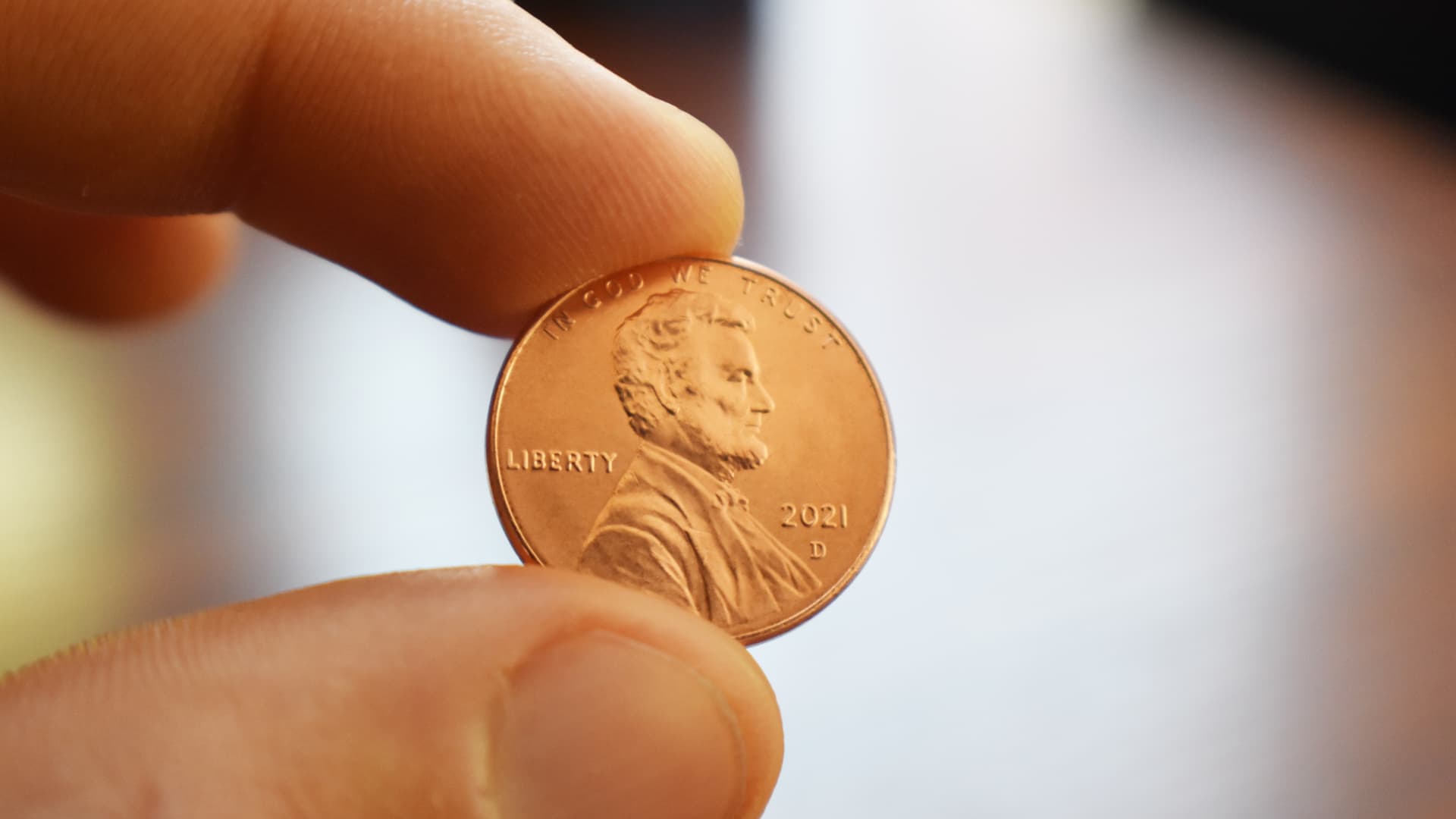
The U.S. Mint struck its final penny in Philadelphia last week, effectively ending the 232-year production run for the penny.
Much of this change is driven by higher production costs and lower cash usage. According to the U.S. Mint, over the past 10 years, the cost of manufacturing a Mint penny has increased from 1.42 cents to 3.69 cents.
The penny has not been phased out and still counts as legal tender, with the final batch expected to enter circulation in early 2026. However, because new coins are not being produced, the circulating supply dwindles as the old pennies fall into disuse. Some retailers are already reporting penny shortages due to production cuts, Reuters reported.
And as fewer people use cash, especially coins, to make purchases and more people pay with cards or smartphones, small change plays a smaller role in everyday transactions. Cash now makes up 14% of consumer payments, down from 31% in 2016, according to Federal Reserve data.
“Now is a good time to cash out (the coins),” says David Rosenstrock, a certified financial planner at Wharton Wealth Planning. “The main reasons have to do with practicality: coins have less purchasing power, take up more space, and are less convenient to use and exchange.”
Let’s see why.
It has become difficult to exchange coins.
One of the most reliable ways to convert coins into cash is through a bank. Banks may accept rolled coins or, in some cases, use in-branch counting machines for account holders. Another common option is coin-counting kiosks, often found in grocery stores, but they often come with a fee.
But many banks have reduced the number of coin-counting machines in their lobbies, and these services are no longer as widely available, according to Bankrate. With fewer places processing coins, it’s becoming harder to turn jars or bags of coins into cash.
Overall, the need for coins is low.
Although pennies are still in circulation, their use by businesses is expected to decrease. Many retailers are expected to round cash transactions to the nearest nickel, as happened in Canada, which abolished the penny in 2013.
Some retailers are already doing this, including some Wendy’s and McDonald’s locations and Midwest convenience chain chain KwikTrip, according to CBS.
There’s also no federal law requiring private businesses to accept specific U.S. currencies, so some stores have signs that say “We don’t accept pennies.”
However, some states require strict changes. Still, the need for cash, especially coins, continues to decline as most purchases are now made with cards and smartphones. As a result, coins are becoming less convenient to use and exchange as many businesses move away from handling small amounts of cash.
Coins lose value due to inflation
Coins stashed in your home don’t earn interest, so they lose purchasing power over time as inflation rises.
A 2022 Federal Reserve report estimates that the median household holds between $60 and $90 in coins.
Assuming you had about $100 worth of coins in your jar in 2020, you can buy about $20 less with that money today than you did five years ago, based on inflation as measured by the Consumer Price Index.
In contrast, coins do not earn interest on their own, so a high-yield savings account would have helped limit the loss of purchasing power. The annual yield on these accounts is now over 4%, which is higher than the current year-over-year inflation rate of 3%.
“Once you convert your coins, put them in a high-yield savings account and actually make money from them instead of collecting junk,” says Alvin Carlos, CFP at District Capital Management. “It’s low-stakes money, but it’s still money. Small habits like organizing your change, consolidating old accounts, and selling things you no longer use can add up surprisingly quickly.”
Earn more and get ahead with CNBC’s online courses. Black Friday has begun! Use coupon code GETSMART to get 25% off select courses and 30% off exclusive bundles. Offer valid from November 17th to December 5th, 2025.
Plus, sign up for the CNBC Make It newsletter for tips and tricks to succeed at work, money, and life, and request to join our exclusive community on LinkedIn to connect with experts and colleagues.

