

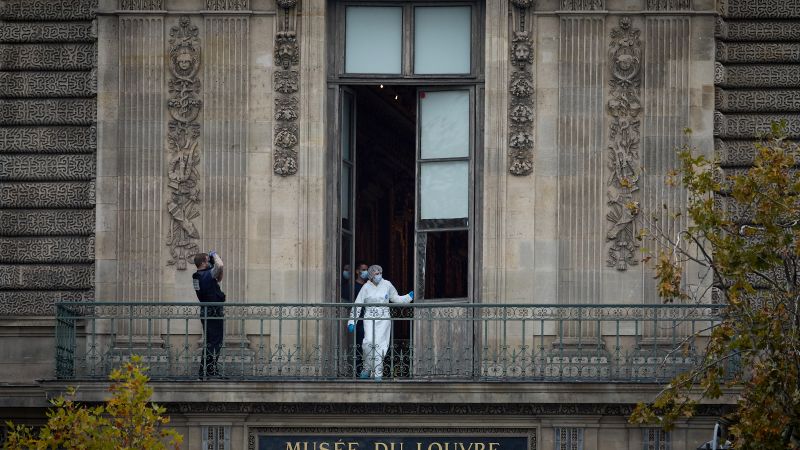
Editor’s note: This account of the investigation into the Louvre robbery is based on public statements from prosecutors, museum officials, and French and American investigators who agreed to interviews with CNN on condition of anonymity.
Saturday evening, October 25, marked the fourth day that surveillance teams had been tracking the 34-year-old Algerian suspect in the Paris suburb of Seine-Saint-Denis.
Work was stressful and boring. More than 130 nationalities live in Seine-Saint-Denis, many of them from North Africa. It was difficult for the surveillance team (a division of the Paris police department known as Recherche et d’Intervention (BRI)) to integrate into the close-knit community.
Well, the suspect was on the highway. The team did not know his destination, but his route appeared to be heading towards Charles de Gaulle Airport.
He also had a bag. He may contain some of France’s greatest treasures.
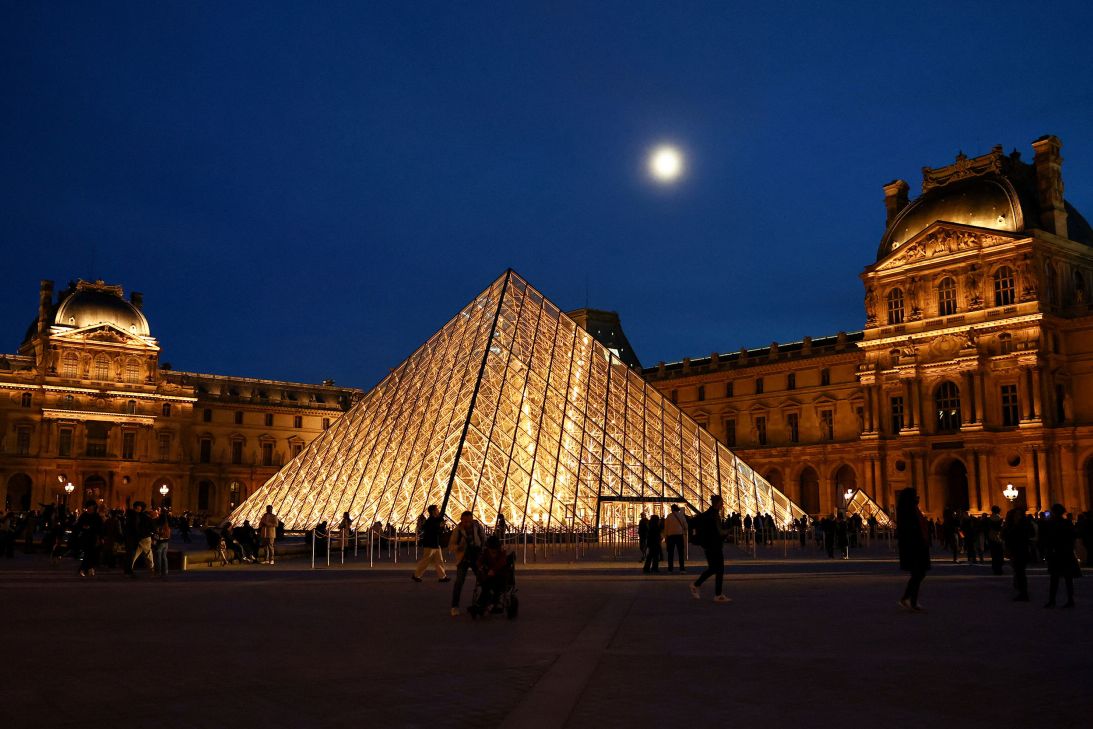
Six days ago, a robbery occurred at the Louvre Museum, shocking the world. Four purposeful robbers broke into the world’s most visited museum and made off with a collection of jewelry with an estimated value of more than $100 million.
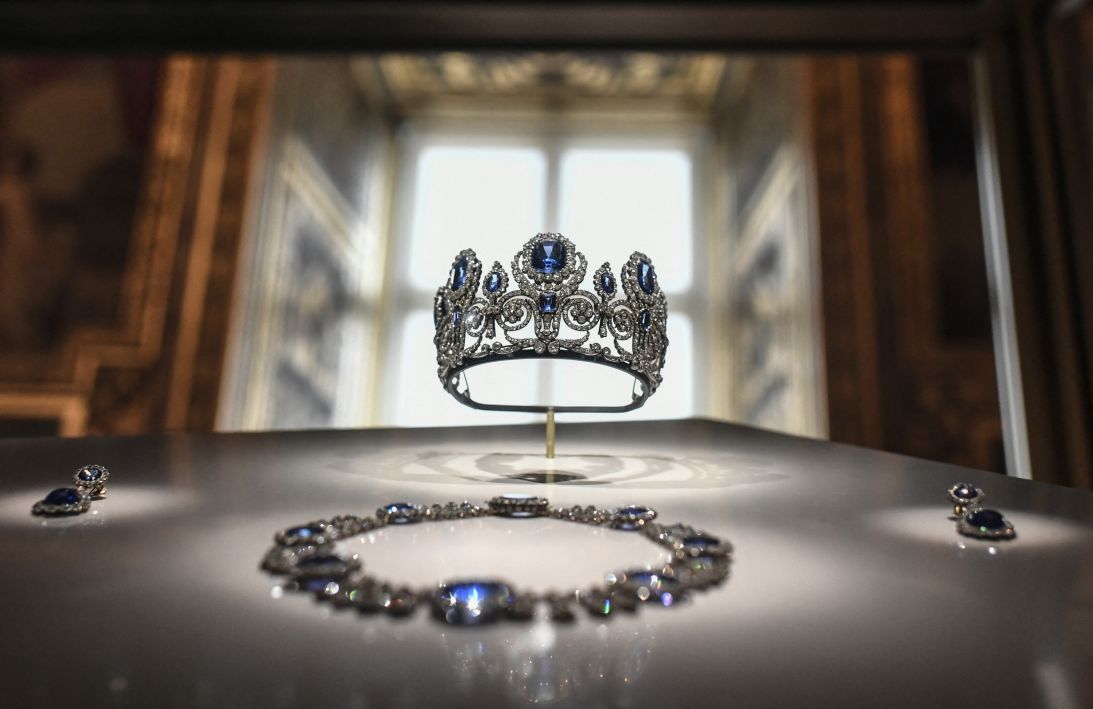
But this was about more than money. It struck at the heart of French history. Items stolen included an emerald necklace set with more than 1,000 diamonds that Napoleon gave to his second wife, and a diamond and sapphire jewelry set worn by Queen Marie Amélie and Queen Hortense.
Pursuing the suspect on the highway, the BRI acted as a leapfrog, communicating by radio and managing a deft choreography of tail switches to prevent the car from remaining behind the Algerian for too long.
The team leader asked up the chain of command, “If the target comes into the airport, are we going to take him?”
Stay with him, instructions returned. Let him go as long as you can.
Surveillance teams were deployed. Shortly after, the suspect got a ticket, went through security and headed to the gate. He had booked the next flight to Algiers.
At 8:00 p.m., as no one seemed to be approaching him, the order was given to “take him.”
After his arrest, his bag was searched and no jewelry was found.
We tend to glorify the people who commit these crimes. We imagine the culprit to be a handsome, soft-spoken, sophisticated man wearing a black turtleneck, rappelling down a skylight and navigating a web of laser-powered motion sensors. The precious artworks and jewelry they steal end up in the supervillain’s collection in a remote mountain castle. Perhaps works by Rembrandt, Vermeer and Degas stolen from Boston’s Isabella Stewart Gardner Museum in 1990 hang there, and empty frames haunt the walls of the Gardner Museum, waiting for their return.
But that’s a Hollywood thing. Paris prosecutors described the four suspects currently in custody in the case, three of whom are believed to have been directly involved in the robbery, as local petty criminals with no connection to organized crime. None have been publicly identified by authorities.
The search for the Louvre suspect has relied on investigative agencies like the BRI, which I spent time with after the 2015 Paris attacks when I was then the New York Police Department’s deputy intelligence chief. I was impressed by their skill at tracking suspects and blending into the scene, using mixed-ethnic team members to stalk their targets by whatever means best suited the situation: discreet cars, vans, taxis, scooters, motorcycles, or on foot on the streets or in the Paris metro.
The Paris police’s robbery squad, the Brigade de Répression du Banditisme (BRB), is also involved in the robbery investigation. These detectives investigate gangs like the Pink Panther gang, who are suspected of stealing diamonds across the continent and selling them on the black market in Antwerp, Belgium. And they have solved many high-profile cases, including the 2016 armed robbery of Kim Kardashian in Paris, where thieves made off with nearly $10 million worth of cash and jewelry. Eight people were convicted as a result of BRB’s work in this case.
BRB detectives, who have a wealth of informants in the Parisian underworld, could tap into their networks to get an instant theory (perhaps a name or two) about the Louvre incident. But they can all lead to a dead end.
Instead, BRB focused on forensics. Fingerprints, hair, DNA traces – any of these can lead to a real name through France’s national DNA database, which stores samples taken from convicted criminals and suspects.
Robbers were designed to get in and out quickly.
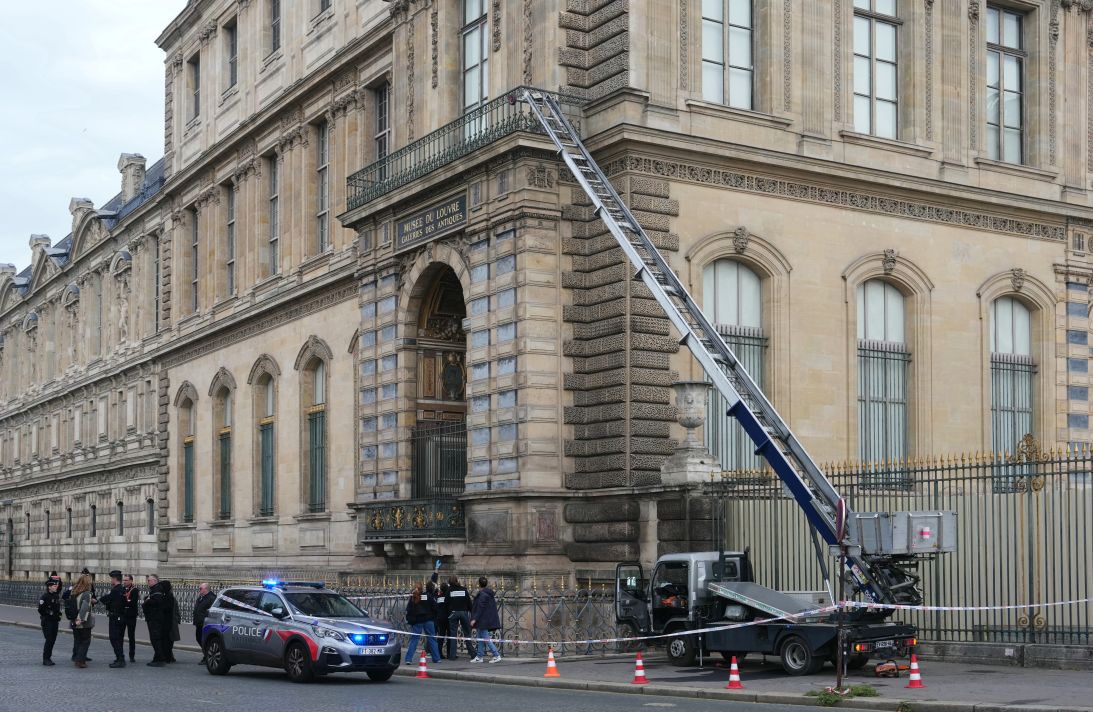
A month ago, on Sunday, October 19, four robbers drove a lift truck stolen a few days earlier under the windows of the Louvre’s Apollo Museum, where jewelry was on display. To legitimize their presence, they placed orange cones around their trucks and wore high-visibility vests.
Two remained on the ground while the other two went up in buckets lifted along the truck’s extension tower. They used an angle grinder to pry open a window and gain access to the gallery. There, they broke into two heavily guarded display cases and stole nine items, brandishing angle grinders whenever guards approached. Less than four minutes later, they were out the window and taking the elevator down.
Then they dropped it. Empress Eugenie’s crown slipped and fell nearly two stories, along with 1,354 diamonds and 56 dark green emeralds. Officials told CNN that the Crown fell between two fences in the dry moat, and that a bystander’s video of two men bending down from the lift captured the moment of the Crown’s fall.
They will have to depart without a crown of the finest jewels.
Witnesses said the attackers tried to set the lift truck on fire with handheld torches and gasoline, but museum security stopped them.
I quickly ran out of time. They jumped on a Yamaha TMAX scooter and fled.
French Interior Minister Laurent Nuñez said the entire robbery took just seven minutes.
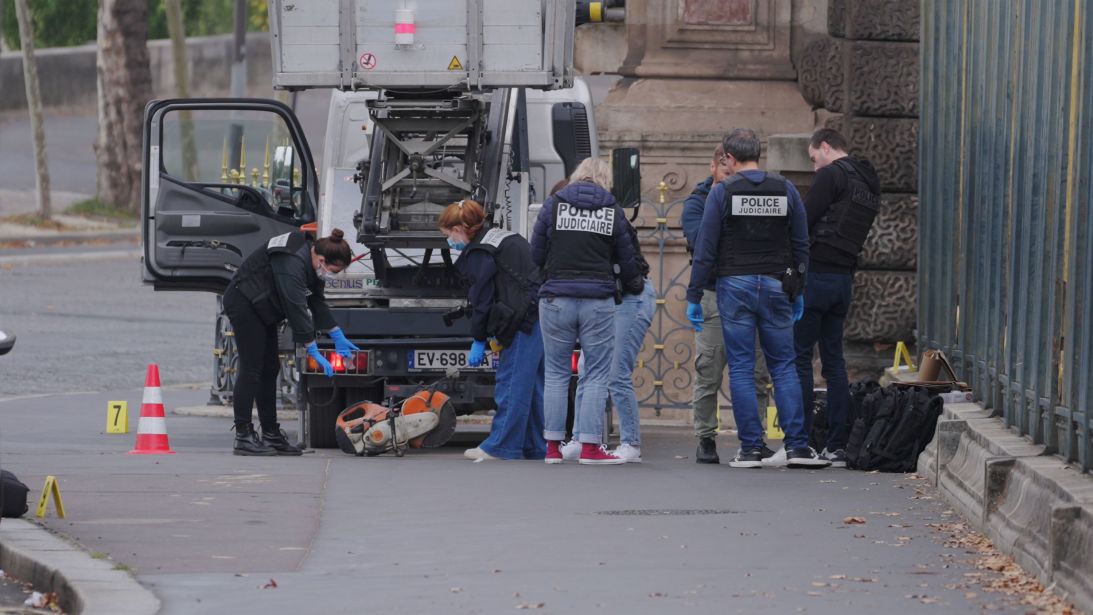
On the first day of the investigation, Paris police’s forensic team slowly and carefully photographed the scene, swabbed DNA, took fingerprints and secured leftover clues, including an angle grinder, a white helmet, a torch and an orange cone.
Meanwhile, BRB was working with the police command center that controls thousands of cameras and number plate readers in Paris. Investigators found footage of the suspects fleeing along the Seine River on scooters at speeds of about 160 mph, then abandoning the scooters and getting into cars heading east.
One of these scooters was recovered and processed for DNA and fingerprints. Police were taking every opportunity to collect forensic evidence.
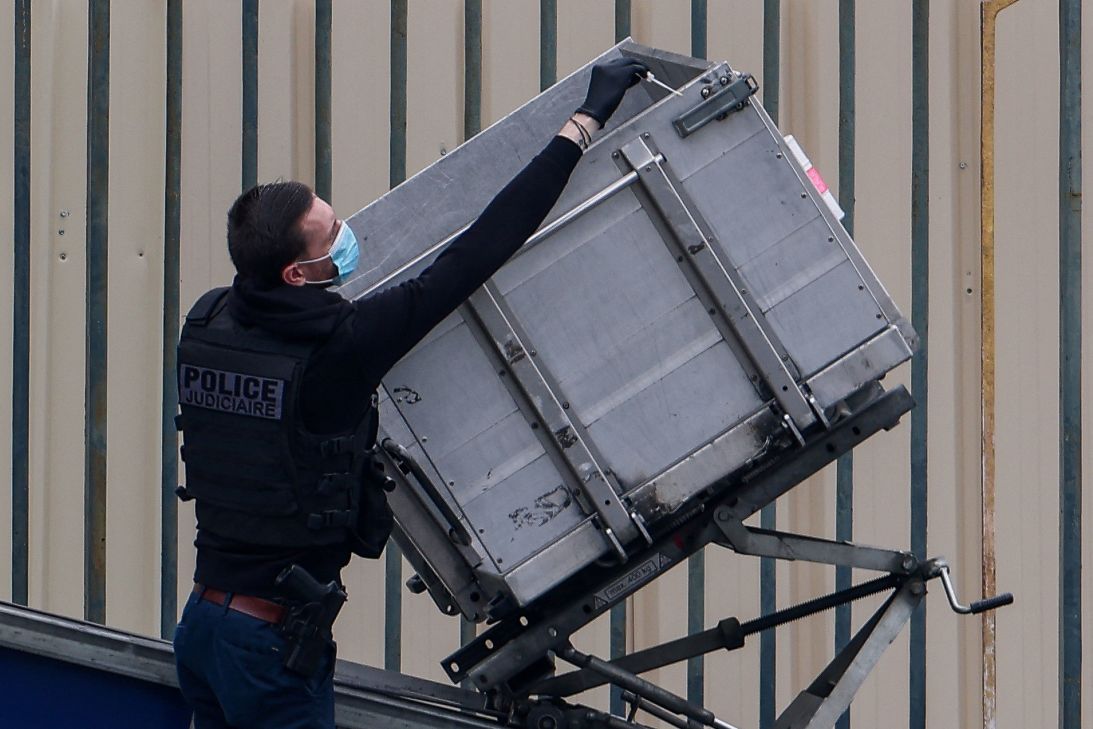
Their efforts paid off. DNA recovered from the getaway scooter matched that of a 34-year-old Algerian, who was already registered in a criminal database, and was arrested at the airport on the night of October 25th.
And prosecutors say the DNA from the angle grinder and the Louvre window matched that of another person. The man, a 39-year-old unlicensed taxi driver, was previously known to police for aggravated theft and was under judicial supervision for ramming his car into an ATM and removing the cash inside.
Still, their backgrounds seemed out of proportion to the daring Louvre robbery, which at first seemed like the work of experienced professionals.
But investigators were confident they had the right suspect. DNA evidence gave us some certainty.
Immediately after detaining the Algerian at the airport, authorities had to make another decision. Taxi drivers already under BRI surveillance may decide to flee themselves if they learn that an alleged accomplice is in custody.
A team was ordered to arrest him immediately.
Four days later, on October 29, French prosecutors claimed that the two had made a “partial” confession in connection with the crime. Officials told CNN that the confession was made as the suspects tried to explain why their DNA was found at the scene, tools and the getaway vehicle.
Based on these statements, along with information obtained from the two suspects’ cell phones and other observations made during surveillance operations, investigators identified other persons of interest.
Soon after, BRB detectives began casting their net. Several more people were arrested in Paris and Seine-Saint-Denis, but all but two were scheduled to be released without charge within days.
One of the two men, aged 37, is believed to be the third member of the Louvre robbery team. The fourth person, a 38-year-old woman, is said to have been in a relationship with the suspect. It’s unclear whether investigators believe she participated in the plan or if she allegedly helped the suspect after the fact. According to prosecutors, both suspects deny involvement.
All four suspects are under formal investigation on suspicion of organized theft and criminal conspiracy.
Combined, these arrests mean police may have three of the four robbery suspects in custody. Still no jewels were found.
After past robberies, we had better results. Let’s take the 1964 incident as an example. This incident became the prototype for many art theft fictions that followed.
That year, Jack “Murf the Surf” Murphy (a self-proclaimed violinist, Miami-based surfer, and professional jewelry thief) arrived in New York with an audacious plan to steal the world’s largest star sapphire, as well as six other diamonds and rubies, locked in a glass case at the American Museum of Natural History.
Murphy and his accomplices stationed guards outside, rappelled down from above using ropes to collect the jewels, and disappeared into the night, unnoticed by alarms or guards. In that sense, it was the same as the movie.
However, within two days, the NYPD arrested the first suspect and quickly arrested two others, including Murphy. A few months later, Murphy reached an agreement with the district attorney. If the jewels are returned, the sentence will be shorter. In fact, Murphy and his crew spent just three years in New York’s Rikers Island prison after the jewelry was recovered from a Miami bus stop locker. The Star of India is now housed in a museum.
Could something similar happen with the Louvre incident? Will the jewelry be returned, or will the tiara and necklace be ransomed by a third party? Or have the gold already been melted down and the diamonds, rubies and sapphires stripped from the setting and sold for the sum of their parts?
It is unlikely that this happened before the suspect was quickly apprehended. That would mean they have jewelers talented enough to do the job and unscrupulous enough to be willing to do it. It may have meant finding buyers. Still, with a highly publicized robbery and a police pursuit, jewelry in any form, even on the black market, would have been prohibitively dangerous.
That may mean there’s still hope for France’s treasure. History tells us that with the right deal, they can come back.
