

london
—
Cambridge Dictionary has focused its Word of the Year for 2025 on ‘parasocial’. This is used to describe the connection people feel to someone they don’t know, or even an artificial intelligence.
The term was coined in 1956 by sociologists Donald Houghton and Richard Wall to try to explain how TV viewers form “quasi-social” relationships with TV personalities, the dictionary said in a statement Tuesday.
This phenomenon continues today, with social media users forming parasocial relationships with celebrities, influencers, and online public figures with whom they have no personal connection.
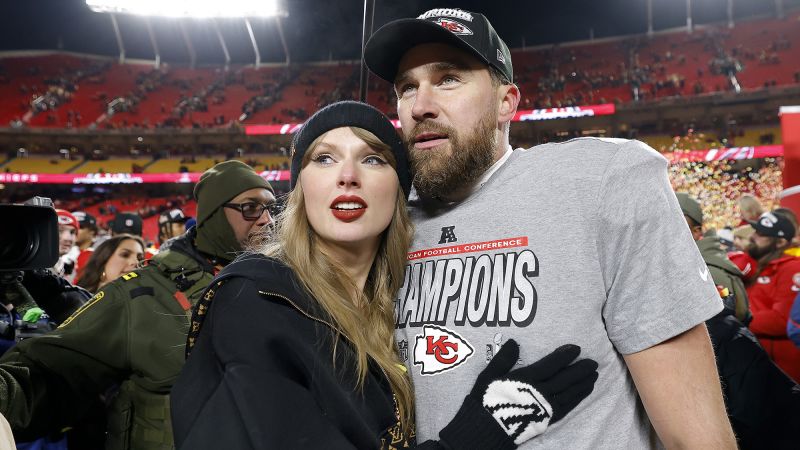
A key example cited by Cambridge Dictionary is singer Taylor Swift, who announced her engagement to NFL star Travis Kelsey this year, with many fans expressing their heartfelt feelings for the couple, who had never met.
Another is British singer Lily Allen, whose latest album, West End Girl, tells the story of a breakup and has sparked “parasocial interest in her love life,” according to a statement.
And usage of the term has skyrocketed this year, especially as concerns surfaced that some people have started building connections with AI chatbots such as ChatGPT.
Colin Mackintosh, a lexicographer at Cambridge Dictionaries, said the word “captures the zeitgeist of 2025” and shows how language is changing.
“What was once specialized academic terminology has become mainstream,” he said in a statement.
“Millions of people are involved in parasocial relationships, but many more are simply intrigued by their rise,” McIntosh added.
“The language around parasocial phenomena is rapidly evolving as technology, society and culture change and mutate. From celebrities to chatbots, parasocial trends are of interest to anyone interested in the evolution of language,” he said.
Simone Schnall, professor of experimental social psychology at the University of Cambridge, said in a statement that the term was “an inspired choice.”
“The rise of parasocial relationships has redefined the way fandoms, celebrities and AI interact online with the public,” she said.
“We have entered an era where many people have unhealthy and intense parasocial relationships with influencers,” Schnall added.
“This leads to a feeling of ‘knowing’ the person with whom people have a parasocial bond, trusting them, and even an extreme form of loyalty. But it is completely one-sided.”
Cambridge Dictionary also highlighted a number of other words that had a “significant impact” this year.
That number also includes “slop,” defined as “very low-quality content on the Internet, especially when created by artificial intelligence,” and “memification,” or “the turning of events, images, people, etc. into memes.”
And this year, the dictionary added 6,000 new words, including notable new words like “delulu,” “skibidi,” and “tradwife.”
