

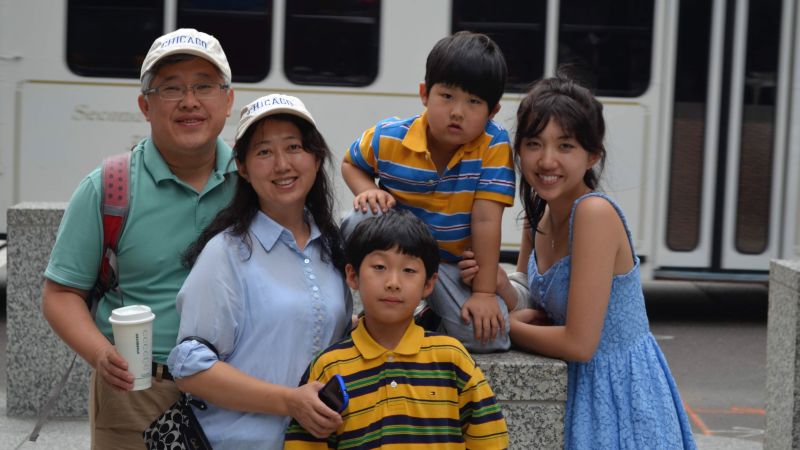
Grace Ginn Drexel tried not to panic when she couldn’t reach her father on Oct. 10. She had just heard that one of the pastors of his underground Christian church in China had been detained by authorities. Perhaps he was busy sorting out the situation.
Later, her fears were confirmed. Her father, Ezra Jin Mingli, and dozens of other Zion Church members were caught up in a massive crackdown across various congregations and cities in China. This is the biggest crackdown since a similar wave of arrests in 2018.
Experts say Chinese authorities have long considered Christianity an unwelcome foreign influence and a threat to government control, and the latest crackdown sends a particularly harsh message by targeting well-known churches that have been shut down before.
But Drexel and her family, all Americans living in the United States and Jin in China, are hopeful that a major diplomatic meeting this week may change the situation.
On Thursday, US President Donald Trump will meet with Chinese leader Xi Jinping on the sidelines of the Asia-Pacific Economic Cooperation (APEC) summit in South Korea. Trade issues are expected to dominate the conversation, but there are growing calls for Trump to raise the issue of the crackdown and Jin’s detention.
Drexel, who works as a staffer in the U.S. Senate, said the summit has “very unique timing.” “We think that the Trump administration’s prioritization of Americans in this scenario could help my father bring his family of American citizens home to be safe with us in America,” she told CNN on Monday.

President Trump has not publicly commented on the issue, and it is unclear whether it will be on Thursday’s agenda. The United States and China reached a trade framework agreement this week ahead of a meeting between President Trump and President Xi in response to a series of increased tariffs, but tensions between the two countries remain high.
But Drexel and his family see this as a unique opportunity in the face of potential charges against Jin for illegally disseminating information online, which Drexel said would make negotiating his release even more difficult.
She and Mr. Jin have powerful backers, including Secretary of State Marco Rubio and members of the Congressional Executive Committee on China.
“The persecution of Christians and people of other faiths must end, and we must make clear to the Chinese Communist Party that the United States will use all diplomatic and economic tools to hold Chinese Communist Party officials accountable,” Sen. Ted Cruz said in a video shared by the Hudson Institute, a think tank where Drexel’s husband is a fellow.
Asked earlier this month about Rubio’s request for the pastor’s release, a Foreign Ministry spokesperson said: “The Chinese government manages religious affairs in accordance with the law and protects people’s religious freedom and normal religious activities. We firmly oppose the United States’ interference in China’s internal affairs under the guise of so-called religious issues.”
CNN has contacted the Ministry of Foreign Affairs in Beihai, where Kim is being held, and the Beijing Municipal Public Security Bureau for comment.
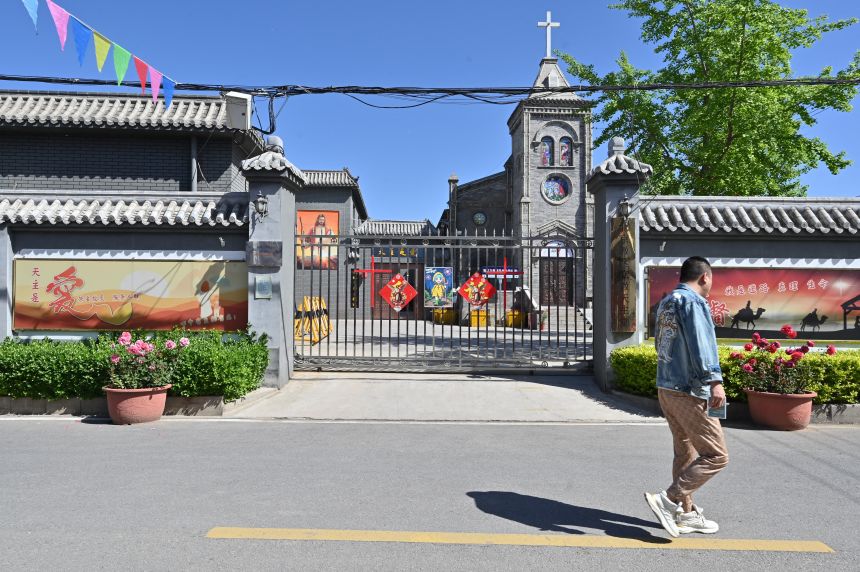
The crackdown is the latest in a long history of religious repression in China. Religious practices are legal but strictly controlled and monitored by the government, which registers “official” state-sanctioned churches.
The government recognizes only five faiths: Chinese Buddhism, Islam, Catholicism, Protestantism, and Taoism. Other local spiritual and religious movements have also suffered severe repression over the years. But that hasn’t stopped communities from establishing their own underground, unregistered churches known as “house churches.”
One Christian, a 44-year-old resident of Beijing, told CNN he attended several “house churches” and saw plainclothes police officers come in and ask everyone to register.
During previous crackdowns, “when our brothers and sisters were arrested, we all donated money and sent someone to visit them in prison and buy them food and clothes,” she told CNN.
Zion Church is one such “house church” that the 44-year-old recalled attending previously. Jin founded Zion Church in Beijing in 2007, when his family was still living in China. Drexel said it gradually became one of Beijing’s largest churches.
By 2011, Jin was speaking out about the oppression of other congregations in hopes of gaining legal recognition for the underground church. “We are very aware of what we are doing,” he told CNN in 2011 when he granted rare access to footage inside the church. “And we are prepared to pay that price.”
The price came in 2018. That year, Drexel said the government launched a “pressure campaign” to install facial recognition cameras in church building lobbies after Ginn refused to install facial recognition cameras inside the church.
Hoping to appease the authorities, Jin and his family immigrated to the United States. As the harassment of church members in Beijing continued, Jin decided to leave his family behind and return to China later that year.
That was the last time most of the family saw Jin. A crackdown soon followed. The Church of Zion was closed and the Jinn were prohibited from leaving the country. More than 100 members of another church were detained in Chengdu, and its pastor, Wang Yi, was jailed for nine years on charges of “inciting subversion of state power.”
Drexel visited her father in 2019, but she too was prevented from leaving China for 11 months, derailing her plans to attend law school. She was eventually allowed to return to the United States, but has not seen her father since.
Since 2018, Jin has turned Zion Church into a semi-virtual network, uploading sermons online and encouraging members across the country to gather and watch sessions together. When the pandemic hit, Zion quickly adapted to Zoom, and church membership exploded.
“Many people went to (online) church because there was nothing people could do because of the Chinese Communist Party’s own policy of locking people inside their homes. Church was the only place they could interact with people,” Drexel said, referring to China’s strict zero-coronavirus and lockdown policies at the time.
Drexel said the church has become a national organization and now sees 10,000 people every day. But there were signs that it was under threat again. Authorities were closely monitoring Mr. Jin’s movements and even prevented him from traveling to other cities in China. Church members reported an increase in harassment and threats.
A fellow pastor, Zion, asked Jin earlier this month, “What if this is a big deal and everyone gets arrested? What will happen?”
“He never hesitated for a second, never got scared,” Drexel said. “He immediately said, ‘Hallelujah, the gospel will spread further.'”
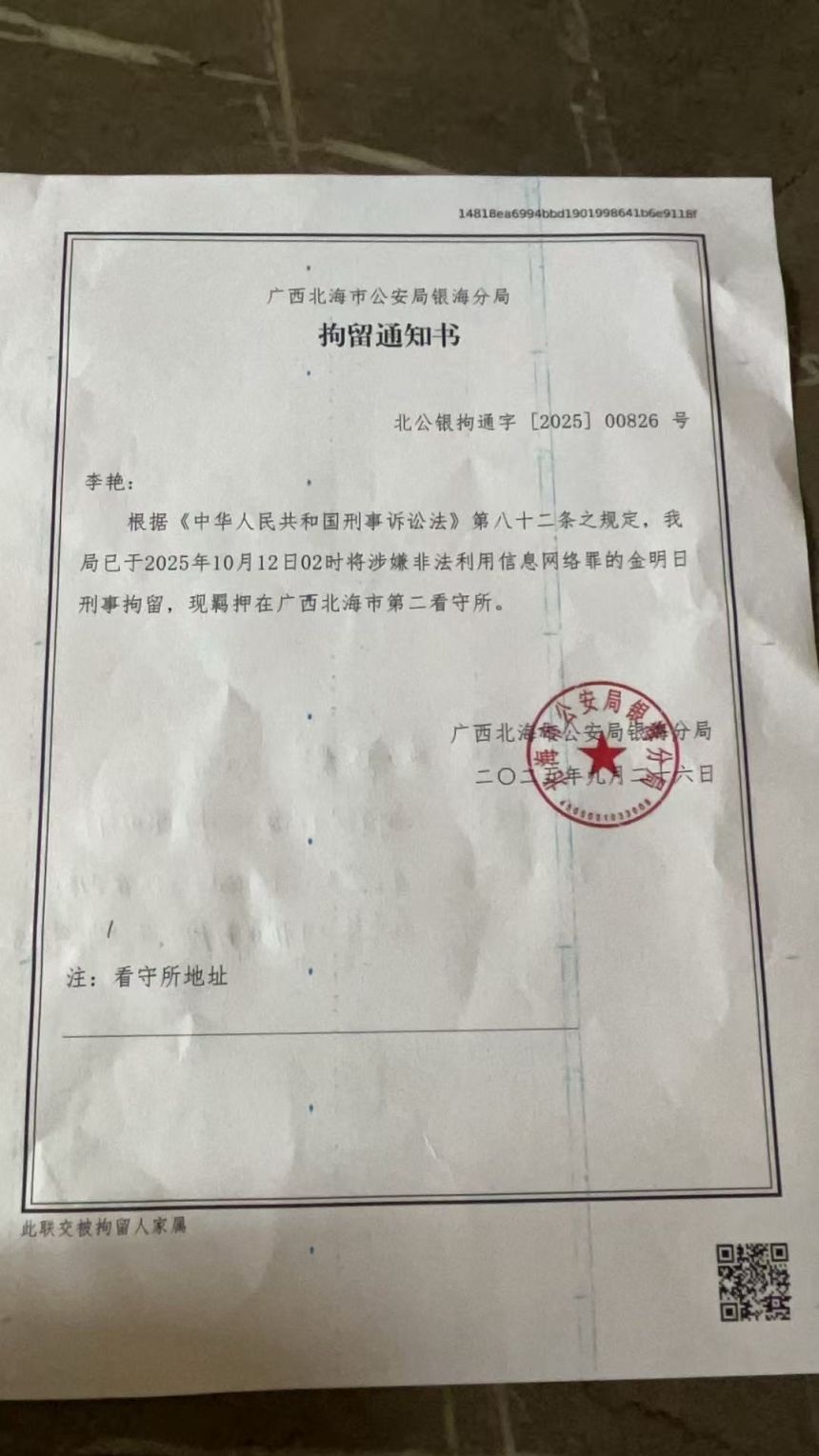
Zion pastors and church leaders arrested in October are currently being held in two detention centers in the southern city of Beihai, Drexel said.
Several people have since been released, but nearly 20 remain in custody, she said.
In a statement on October 12, the church said all of the detainees were “innocent Christians” and said their “only ‘sin’ is to peacefully worship God, faithfully preach the gospel, shepherd the flock, and serve their neighbors. These acts of faith are protected by both the Chinese constitution and international human rights law.”
Drexel said it didn’t just happen to Zion, other underground churches were also targeted, including Bitter Winter Church and Early Rain Covenant Church.
She said the families of the detainees were deeply concerned. Some are elderly with health problems, and some have young children at home. Her father, Jin, has severe diabetes and, although generic drugs are currently available, he is unable to receive a prescription issued by a doctor.
And in a rare development, most of the detainees have been granted legal representation because of the international attention the case has garnered, Drexel said.
Drexel said Jin’s lawyer said he seemed to be in a “relatively good mood” and even joked that his poor diet while in custody was good for controlling his diabetes.
But the risks are high in China’s opaque judicial system, with a conviction rate of about 99%, according to legal experts. Pastor Wang Yi, who was arrested in 2018, remains in prison.
Drexel is still trying to understand why President Xi Jinping’s Chinese Communist Party, whose grip on power has tightened since 2018, is so threatened by “this minority of Christians.”
She said one theory points to China’s ongoing economic difficulties. Alarmed by growing public discontent, the government “could try to crack down on everything, including free speech and other civil society groups,” she says.
Fengang Yang, professor of sociology and director of the Center on Religion and the Global East at Purdue University, agreed in part. Although he is not convinced that it has anything to do with the current economic situation, he stressed that the church poses a serious ideological threat to Mr. Xi, who has tightened religious regulations since taking office and increasingly emphasized the need to “sinicize” religion.
“Chinese authorities have always considered Christianity to be one of the institutions that poses the greatest challenge to (starting) a color revolution and changing people’s attitudes toward the government,” Yang said.
He added that detainees did not appear to be a particular priority for either Trump or Xi ahead of the meeting.
As the world watches for signs of easing tensions between the U.S. and China from high-stakes meetings between the two leaders, Drexel has a simpler wish. He just wants his father back.
“I just wanted to emphasize that my father returned to China because he had a deep love for China and the Chinese people,” she said. “We want to not only serve our community and China, but also stay true to God.”
