

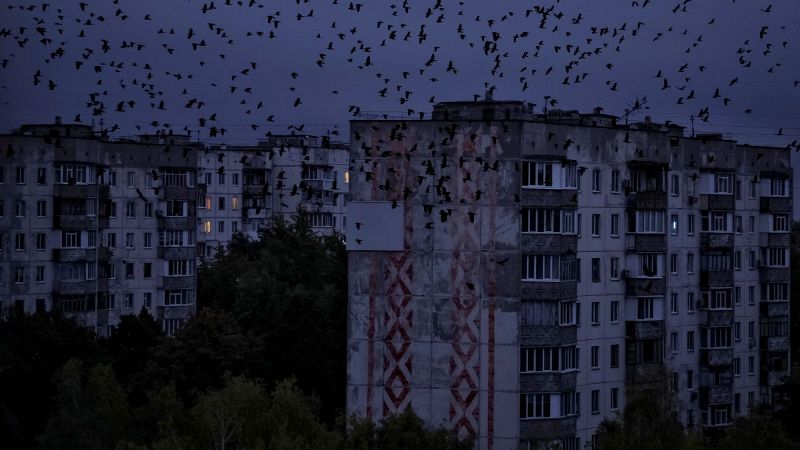
As temperatures drop in Ukraine, Russia is stepping up drone attacks on power facilities that power millions of homes in the country.
There are signs that Russian forces are repeatedly attacking the same areas to further exacerbate the suffering of the population. The northern regions of Chernihiv and Sumy, bordering Russia and Belarus, have been experiencing continuous attacks over the past month.
More than 50 drones and missiles attacked vital facilities in Chernihiv overnight on Tuesday, leaving hundreds of thousands of people without power or water. Two attack drones attacked a heating facility and another energy facility, said Vyacheslav Chaus, head of the military administration of the Chernihiv region.
About 20 Russian drones targeted the town of Novhorod Siversky late Tuesday, killing two men and two women, Chaus said.
Russia targeted Chernihiv’s electricity infrastructure for 15 days last month, according to a regional energy company.
On October 10, there were also major Russian attacks on energy facilities in several regions, including Kiev.
“Russia’s tactic is to kill people and terrorize them in the cold,” Ukrainian President Volodymyr Zelenskiy said on Tuesday.
And Ukrainians are witnessing new Russian tactics.
“Russia continues to deliberately launch unmanned aerial vehicles and circle over damaged facilities, making it impossible to carry out operations safely and deliberately prolonging the humanitarian crisis,” Ukraine’s Energy Ministry said on Tuesday.
Russia has developed a combination of drones and missiles to attack energy infrastructure, sometimes overwhelming Ukraine’s air defenses. In Sumy, which borders Chernihiv, power has not yet been fully restored to the town of Shostka and surrounding areas after a strike two weeks ago.
After the attack, Ukraine’s Foreign Minister Andriy Sibikha called on allies to “urgently mobilize additional support to strengthen Ukraine’s resilience, from energy equipment to energy sources and air defense capabilities.”
“There are 203 critical facilities in Ukraine that need to be protected by air defense systems,” President Zelenskiy said earlier this month, adding that most of them are related to electricity, gas and water.
The Ukrainian government is taking a two-pronged response to Russia’s growing onslaught. These include strengthening Ukraine’s air defenses and long-range missiles to strengthen Ukraine’s own attacks on Russia’s critical infrastructure.
Late Tuesday, Ukrainian officials announced that Ukraine targeted Russia’s Bryansk chemical plant, which produces gunpowder and other explosives, with a long-range Storm Shadow missile. Without mentioning the power plant, the Bryansk region governor claimed on social media that Russia had “detected and destroyed 57 enemy aircraft-type unmanned aerial vehicles” during Tuesday’s attack on Ukraine. CNN has contacted the Russian Ministry of Defense for comment.
However, Ukraine did not acquire the US Tomahawk cruise missiles as expected in Kiev and remains chronically lacking in air defenses.
“Just a few weeks ago, (Russian President Vladimir) Putin felt real pressure and the threat of a tomahawk and immediately expressed a desire to return to diplomacy,” President Zelenskiy said on Tuesday. “As soon as the pressure eased a little, Russia started trying to jump off the diplomatic bandwagon.”
Ukrainian officials are concerned that US President Donald Trump is once again taking a turn for the worse in Kiev ahead of a summit with President Vladimir Putin in Budapest.
Ukrainian sources said Friday’s meeting between President Zelenskiy and President Trump at the White House was tense, if overall constructive. President Zelenskiy himself said that “after many discussions” it was agreed that the starting point for a ceasefire was “the position where we would be on the line of contact, if all sides understood its meaning.”
Less than a month later, President Trump thought Ukraine could regain all the territory it had lost.
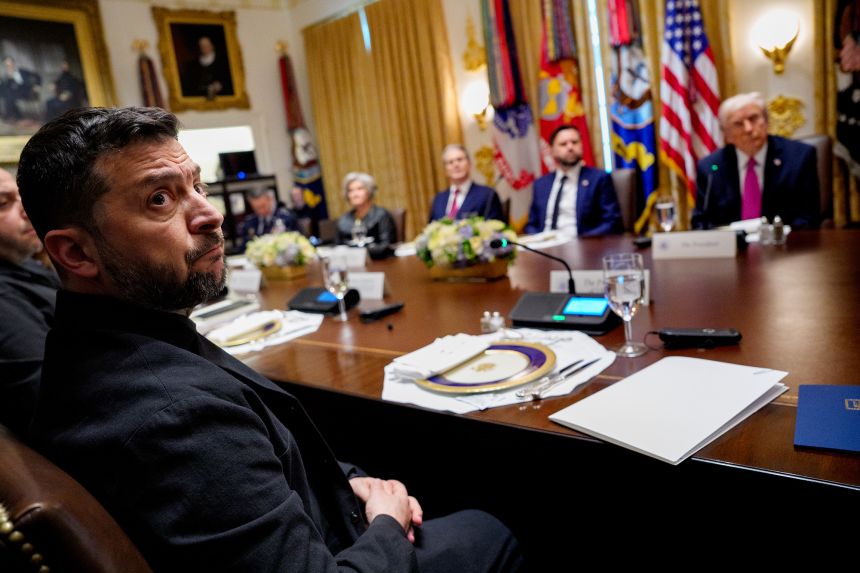
This is not the first time that Zelenskiy has turned to European aid and is scheduled to meet with European leaders on Thursday.
“Russia’s stalling tactics have shown time and time again that Ukraine is the only party seriously committed to peace,” President Zelenskiy and 10 continental leaders said on Tuesday.
“We are developing measures to maximize the value of Russia’s inactive sovereign assets so that Ukraine has the resources it needs,” the joint statement added.
Some $200 billion in Russian assets in Europe have been frozen, and the European Union is exploring ways to use some of them to lend money to Ukraine. German Chancellor Friedrich Merz said last week that he would ask the EU to provide Ukraine with a 140 billion euro ($163 billion) loan to fund the war.
The Kremlin described the idea as an illegal seizure of Russian property.
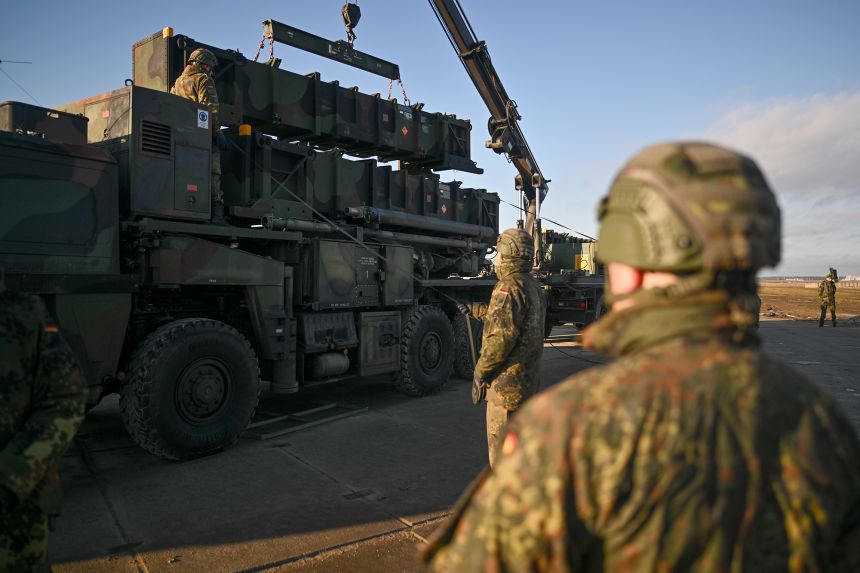
President Zelenskiy has indicated that some of the frozen assets will be used to finance the purchase of Patriot air defense batteries and long-range missiles. He aims to procure 25 Patriot systems, but acknowledges this will take years, not months.
Zelenskyy and Ukraine’s European allies are also wary of a summit in Budapest to be hosted by Viktor Orban, Putin’s closest European ally, but the Kremlin said Tuesday that the venue and date had not been confirmed.
“I don’t think a prime minister who blocks Ukraine everywhere can be of any benefit to the Ukrainian people, or even make a balanced contribution,” Zelenskiy said on Sunday.
Tatyana Stanovaya, an analyst at the Berlin-based Carnegie Endowment for International Peace, said there is a clear pattern to Putin’s tactics.
“Every time President Trump gets too angry and dissatisfied with Russia, Russia reaches out,” Stanovaya wrote on Tuesday.
After Putin’s conversation with Trump on the eve of Zelensky’s visit to Washington, “Trump’s tone seems to have changed,” Stanovaya said. “He went back to saying Russia is winning, Ukraine has to give up territory, and the United States can’t afford to keep sending missiles. Russia’s position hasn’t changed at all. It’s the same as it was six months ago, or even a year ago.”
Asked on Sunday how Kiev would react if the Budapest talks failed, Ukraine’s president said: “Even though it looks like we’re cornered, it’s not as hopeless as it seems.”
