

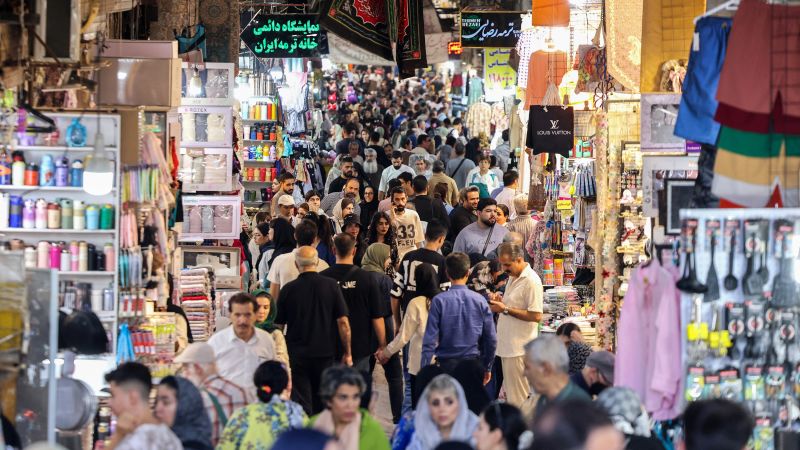
Researchers say Iran’s middle class, which has long supported political moderation, stability and economic growth, and served as the basis of the country’s reform movement, is rapidly shrinking under pressure from Western sanctions. What was left behind was a growing social backlash and a widening gap between rich and poor.
The study, published in the European Journal of Political Economy, used innovative methods to examine the true extent and damage of Western sanctions on Iran since 2012, and how they have led to a decline in the middle class, leaving more Iranians to suffer on low incomes while a small elite thrives.
The resentment between social classes is clear when speaking to Iranians, and the frustration felt by young, well-educated people is more evident than ever. According to the Iranian Statistics Center, the current unemployment rate in Iran is 7.4%, while the International Monetary Fund (IMF) predicts it to be 9.2% in 2025.
“I feel the gap between rich and poor more than ever before. Everything has become more expensive, whether it’s bread or chicken,” said Elham, a Tehran schoolteacher trying to make ends meet. “On the other hand, you see people in fancy coffee shops and fancy restaurants.” Elham, like other Iranians in the country who spoke to CNN, asked not to be identified due to security concerns.
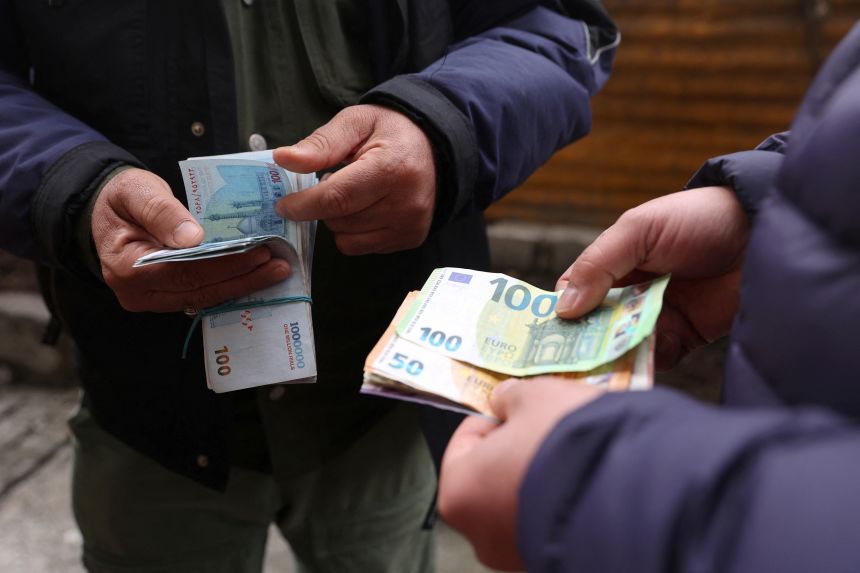
The minimum wage in Iran is approximately 104 million rials, or approximately $110 per month. Prices of basic goods are rising, with annual inflation at 42.4%, according to October statistics from the IMF. Prices for basic household necessities such as rice have nearly quadrupled in southern Tehran, shopkeepers and residents say. Meanwhile, on the other side of the city, wealthy residents frequent a luxury Pilates studio that costs R17 million.
The recent conflict with Israel has highlighted the disparity between rich and poor. Israel’s bombing of the Iranian capital targeted both wealthy and less-rich areas of Tehran, but amid fuel shortages, residents who had the means and access to additional fuel were able to flee the city and even the country. “Even if I wanted to leave Tehran, I couldn’t. I couldn’t get fuel to drive anywhere, and I didn’t have money to go to Armenia or Turkey,” said Reza, 36, one of the residents.
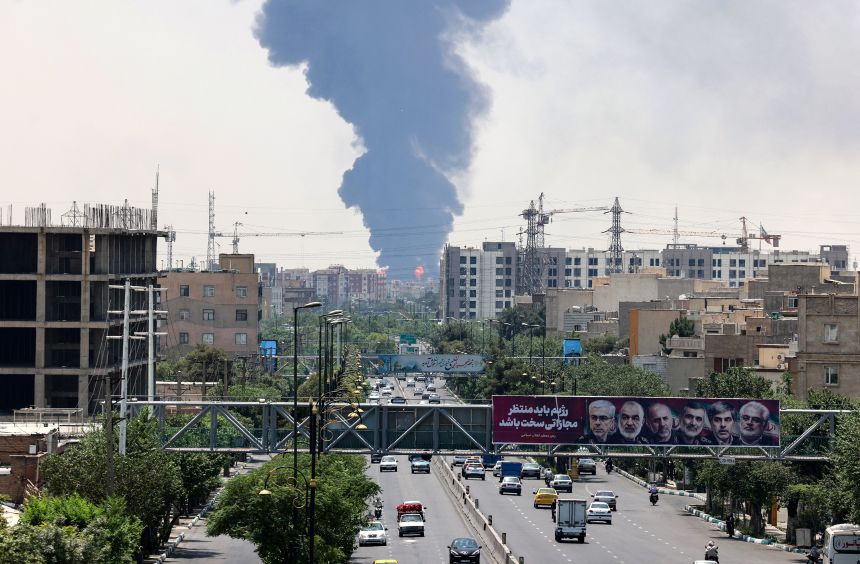
The widening gap and inequality between rich and poor is like a festering wound, Mohammad Reza Farzanegan, a professor of Middle East economics at Germany’s Marburg University and one of the authors of a new study, told CNN that the gap could lead to deep social resentment and undermine national unity in this country of about 92 million people.
While Iran’s elites continue to benefit from the current system, “the rest of society is left to compete for dwindling resources as the economy shrinks. The result is a society with increasing inequality and perceptions of inequality,” he said. He added that perceived inequality is even more dangerous to social stability than inequality that actually exists.
Sanctions have long been advocated by Western countries as a humanitarian tool in foreign policy and diplomacy, but proponents often describe them as surgical and precise, targeting governments and leaders with minimal impact on civilian populations. But researchers who have studied Iran, one of the most heavily sanctioned countries in the world, have found that sanctions have not only decimated the economy, but have also punished the middle class, the part of Iran’s population that has historically pushed for reform and change.
Farzanegan and his co-author Nader Habibi, a professor of economics at Brandeis University in the US, used synthetic control techniques to create a data-driven “twin” of a non-sanctioned Iran and compared that twin to the actual sanctions-targeted Iran. The results reveal that this economic instrument has significant humanitarian, social and political consequences for ordinary people.
The study compared the real Iran with its unsanctioned “twin” from 2012 to 2019 and found that without sanctions, Iran’s middle class would have expanded by 17%. According to their model, by 2019, the real Iranian middle class was 28% smaller than it should have been. Another study, published in the book How Sanctions Work, examined Iranian household data and estimated that approximately 9 million people lost their middle-class status between 2011 and 2019.
Farzanegan believes Iran provides a unique case study. First, the scale and intensity of the sanctions imposed are unique. Iran has faced off-and-on sanctions since the 1979 Islamic Revolution, which toppled Western-installed Shah Mohammad Reza Pahlavi and paved the way for clerical rule, but was hit with the toughest sanctions in modern history in 2012 under the Obama administration. A brief respite came after the nuclear deal known as the JCPOA was signed in 2015, but President Donald Trump re-sanctioned Iran in 2018 through a “maximum pressure” policy.
Second, Farzanegan said Iran occupies a unique position among sanctioned countries due to its demographic structure, which includes a “large, educated, and long-growing middle class.” Western sanctions “attack the very heart of Iran’s modern social fabric,” he explained.
It took a century to create Iran’s middle class of civil servants, teachers, and professionals, and efforts over the past 45 years have focused on restoring poor and marginalized communities through education and opportunity.
From the 1990s, following the Iran-Iraq War a decade ago, Iran’s middle class continued to grow until 2012. Beyond its role in politics, Iran’s middle class is also a source of entrepreneurship, producing some of the most successful startups, including Snap, Iran’s answer to Uber, and Digikara, Iran’s equivalent of Amazon. But many young Iranians say they now have few opportunities.
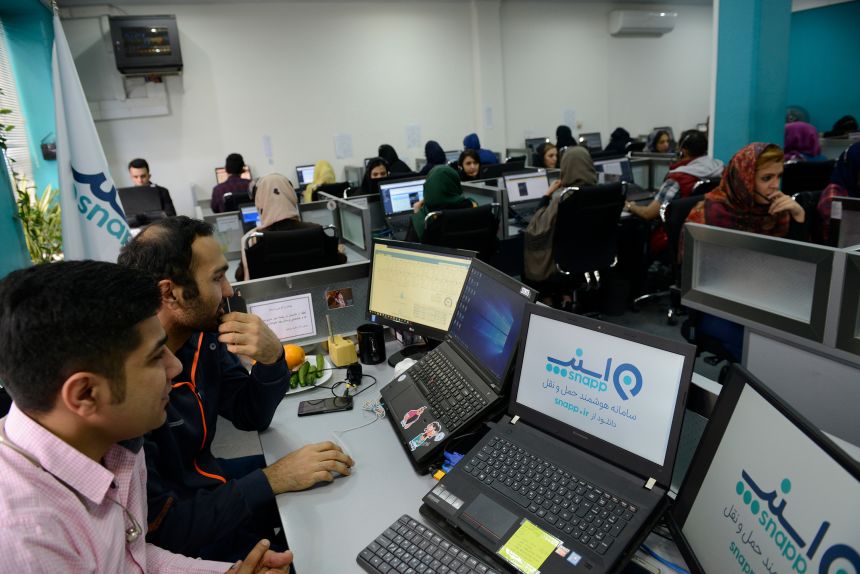
Ali, a 34-year-old resident of Tehran, said: “I spend a lot of time wondering if I should leave the country, thinking about where I should go and where I can get a visa. I’m a driver for Snap and now I also work as a courier, but it’s still hard. I don’t know what else to do because there aren’t many jobs.”
Like many Iranians, Ali is in a predicament. Educated as a computer engineer, he has struggled to find work in his field. His concerns have only grown since diplomatic efforts between the U.S. and Iran stalled and sanctions were further tightened after Israel and the U.S. attacked Iran in June, targeting its nuclear program.
Analysts say the political damage from years of sanctions is already being felt in Iranian society. “While sanctions have weakened independent economic actors, they have strengthened state-related and security actors such as the Revolutionary Guards and Bonyad,” said Sina Toosi, a senior fellow at the Center for International Policy, a U.S.-based think tank. The Islamic Revolutionary Guards Corps (IRGC) is one of the most powerful branches of Iran’s military, and also holds political, ideological, and economic power, and Bonyad is a government-backed charitable trust.
“By directing resources to actors who profit from isolation, sanctions tilted the balance towards factions based on control and conflict, entrenching the power of hard-liners,” Tusi said.
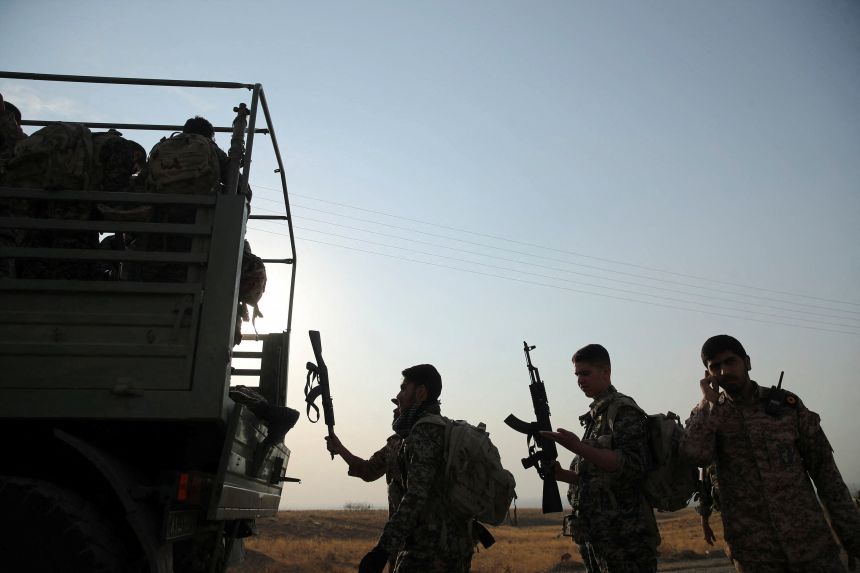
The middle class has historically been a force of moderation and stability in Iran, bridging social gaps and countering extremism. “The middle class has the economic security and the education to assert civil liberties and political responsibility,” Farzanegan said. “Our research shows that sanctions systematically take away this security. When people are busy with day-to-day survival, their capacity for organized, long-term political engagement is severely diminished.”
Iran’s middle class has long been the backbone of reform movements and has been the driving force behind many of Iran’s protest movements over the decades. It has been a base for reformist leaders such as President Mohammad Khatami in 1997, President Hassan Rouhani in 2013, and current President Massoud Pezeshkian.
Farzanegan warns that as the middle class shrinks, he is beginning to see a small group of elites benefiting, while at the top they are insulated from sanctions, and at the bottom what he calls the “new poor” – millions of Iranians – are being pushed down the socio-economic ladder. “Sanctions tied to corruption work in reverse, like Robin Hood, seizing power from the middle class and the poor to enrich themselves,” he said.
This does not completely destroy political engagement, but it changes it. “The mission of politics has shifted from middle-class demands for rights and reform to working-class cries for survival and bread,” Farzanegan says.
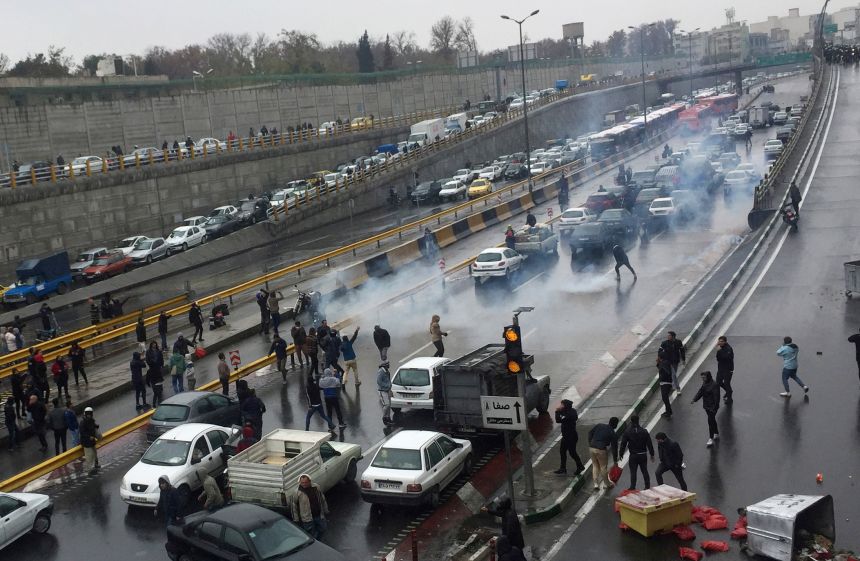
This shift can be seen in working-class-led protests such as the November 2019 fuel protests. Farzanegan said that while these types of protests are an important force, they are “more fragmented and focused on short-term economic grievances, making them unstable and susceptible to state repression.”
Another problem is that by pushing people into poverty, they become more dependent on government services. In Iran, this means relying on social services aligned with the Revolutionary Guards, which are themselves hampered by sanctions, creating an “unsustainable trap,” Farzanegan said.
Sanctions have crippled oil exports, the government’s main source of income, and limited the state’s ability to feed millions of poor Iranians through social safety nets.
Amid concerns of a flare-up of conflict, it is unclear where Iran will go from here. Rebuilding the middle class is possible, Farzanegan said, but it is a “generational challenge.” “Even if all sanctions were lifted tomorrow, it’s not a switch that can be turned back on.”
