

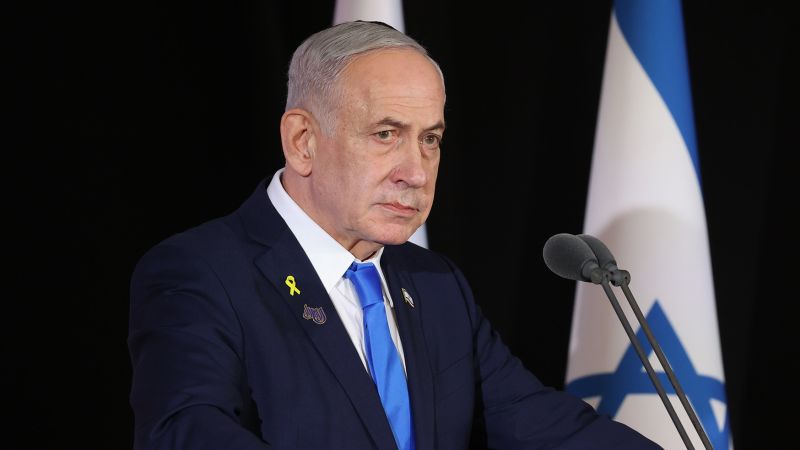
Israeli Prime Minister Benjamin Netanyahu said Thursday that the country’s “struggle is not over” days after Israel and Hamas agreed to a cease-fire deal, which has since collapsed over a dispute over the return of dead hostages.
Earlier this week, Hamas released 20 surviving hostages as part of a ceasefire deal brokered by the United States, Egypt, Qatar and Türkiye. Israel also released more than 1,700 Palestinian detainees and 250 Palestinian prisoners of war it had been holding without charge.
But in Israel, some of the relief felt after the deal is overshadowed by anger that Hamas has so far released the remains of only nine of the 28 dead hostages it held in Gaza.
Prime Minister Benjamin Netanyahu vowed on Thursday that Israel would “achieve all the goals of this war” in a speech to commemorate fallen Israeli soldiers and commemorate the anniversary of the Hamas attack, which falls on October 7, 2023 on the Hebrew calendar.
“The struggle is not over, but one thing is clear today. Anyone who raises a hand against us already knows that he will pay a very heavy price for his aggression. We are determined to complete the victory, which will define our lives for many years,” Netanyahu declared in a speech at Mount Herzl Cemetery in Jerusalem.
Hamas’ military wing said on Wednesday that recovering the bodies of the remaining hostages in Gaza would require “huge efforts and special equipment.” Hamas’ al-Qassam Brigades said in a statement that the group “has complied with the terms of the agreement and handed over all living prisoners and accessible corpses in its possession.”
But two Israeli sources familiar with the matter said Israel believes Hamas knows the location of some of the dead hostages it claims are missing. One of the sources said Israel believes Hamas has access to at least six organizations, and possibly more. The official said Israel knows that five of the bodies have been “disappeared”, but disputes with Hamas continue over several others.
Israel and Hamas had agreed on a mechanism to search for missing bodies, but that mechanism is not yet operational.
Two senior U.S. advisers told CNN on Wednesday that the United States does not believe Hamas is violating its commitments to the agreement by failing to provide bodies. Advisors said they received assurances from Hamas through an independent mediator that it would do everything in its power to return the remaining bodies.
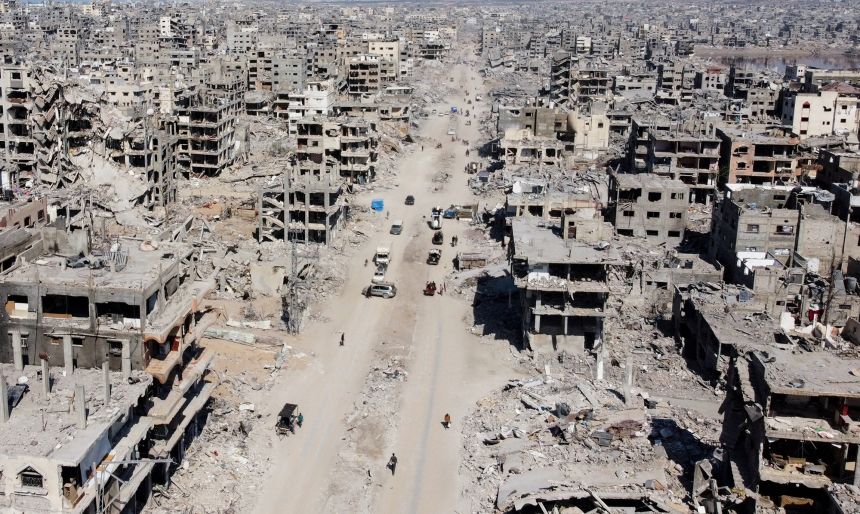
The United States is actively working through intermediaries to provide intelligence and logistical support to find remaining bodies, which in many cases may be buried under rubble and rubble. Large swaths of Gaza have been flattened by Israeli shelling, and about 92% of Gaza’s homes have been destroyed or damaged, according to the latest United Nations figures released on Thursday.
An Israeli official told CNN that, based on intelligence, Israel shared information on the location of some of the bodies of hostages who died in Gaza.
U.S. advisers told CNN that other countries have also offered to help, including Turkey, which has offered to send a team of body recovery specialists with expertise in finding bodies left behind by earthquakes.
The delay in returning all the bodies has soured the euphoria of the Israeli public, whose 20 remaining living hostages were all returned on Monday.
The Hostage and Missing Families Forum said in a statement that the ceasefire agreement cannot continue to be implemented unless Hamas returns all hostages. The group called on Hamas to “fulfill its obligations.”
“Any decision to reduce pressure on Hamas or allow the agreement to continue without the return of the hostages would be a grave moral and leadership failure,” the forum statement added, in an apparent attempt to pressure the Israeli government as well. “The work is not done yet. Our loved ones have not yet returned as promised.”
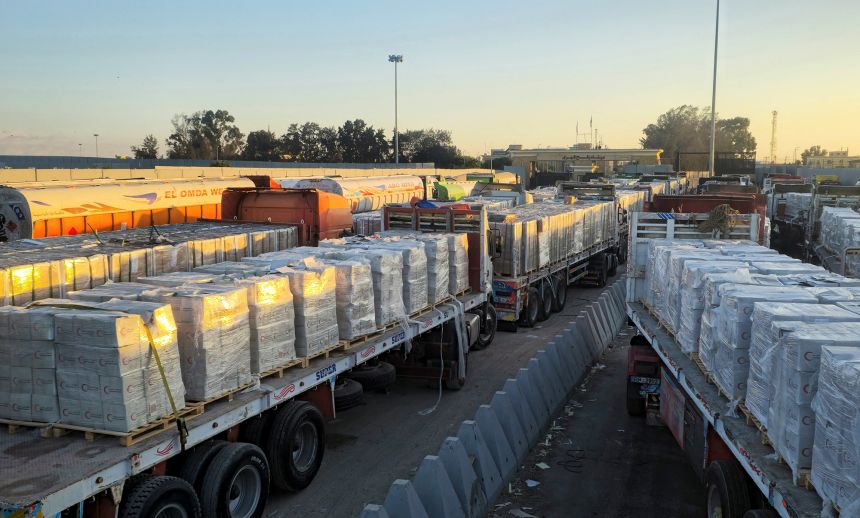
Israel, which had threatened to limit humanitarian aid to the Gaza Strip to pressure Hamas to release more bodies, appears to have backtracked and is now receiving large amounts of aid into the enclave, in line with the amounts required under the ceasefire agreement, U.S. and Israeli officials said.
More than 700 trucks entered the Gaza Strip on Wednesday, some carrying fuel and gas, according to a tally from Israel’s Coordinator of Government Activities in the Territories (COGAT) obtained by CNN. The ceasefire agreement stipulates that 600 trucks be operated per day.
Most of the trucks passed through the Kerem Shalom crossing near Egypt, but fewer than 100 trucks passed through Kisfim in central Gaza.
CNN has reached out to COGAT for comment.
The Hamas government media office said on Wednesday that 480 humanitarian aid trucks entered Gaza, including three with cooking gas and six with diesel fuel.
The United Nations had earlier expressed concern over the threat of aid restrictions, saying aid could not be a bargaining chip.
“Aid facilitation is a legal obligation,” UN Emergency Relief Coordinator Tom Fletcher said in a statement on Gaza on Wednesday.
Meanwhile, Prime Minister Benjamin Netanyahu has yet to declare an official end to the war and has sidestepped the issue of a possible resumption of fighting.
Israeli forces still occupy about 50% of the Gaza Strip, and the ceasefire agreement stipulates that Israeli troops’ withdrawal is conditional on Hamas disarming, but two challenges to the ceasefire agreement remain unresolved.
“Great challenges still lie ahead for our adversaries as they seek to rearm,” Netanyahu said at a ceremony Thursday. “Big challenges and, with them, dramatic opportunities to widen the circle of peace.”
He vowed once again to “bring back all the hostages.”
US President Donald Trump has said he would consider allowing Prime Minister Benjamin Netanyahu to resume military action in Gaza if Hamas refuses to uphold the end of the ceasefire agreement.
CNN’s Ibrahim Daman and Kevin Liptak contributed to this report.
