


Editor’s note: Global Perspectives is a CNN editorial and live event series that examines dynamic economies at the forefront of global transformation. The first Global Perspectives live event, to be held in London on November 3, 2025, will feature expert analysis from leaders, CEOs and innovators, exploring Africa’s role in a changing world.
One of the fastest ways to fly from Nairobi, Kenya to Marrakech, Morocco is via Paris, France.
Despite being on the same continent and approximately 3,700 miles apart, there are no direct flights between these two destinations.
It’s not just these two big cities. Many of the continent’s capitals and large cities do not have direct flights or have very limited schedules, so travelers typically end up making multiple connections in Europe or the Middle East.
The fastest way to get to Morocco from Kenya is via Paris 🤯 pic.twitter.com/FjInzqRejq
— Larry Madowo (@LarryMadowo) September 7, 2025
“The biggest challenge is market access, which allows airlines to move passengers freely to and from African cities without the current restrictions,” said Rafael Couch, consulting director for government, legal and industry at the African Aviation Association (AFRAA).
The continent’s aviation sector operates primarily on bilateral air service agreements, which are agreements between countries that restrict which airlines can operate certain routes.
Many organizations, including AFRAA, are trying to move the continent into a single aviation market like the European Union (EU). The EU will allow EU airlines to operate on any route within the region, as long as there are slots available at airports, and will remove restrictions on prices, number of flights and other operations.
In addition to a lack of connectivity, Africa’s aviation industry suffers from high costs, infrastructure challenges, regulatory constraints and safety concerns, according to the International Air Transport Association (IATA). The region requires further investment in infrastructure, security monitoring and regional hubs. The African Development Bank estimates there will be a $25 billion funding gap by 2040.
According to IATA, Africa’s aviation sector is estimated to support $75 billion in economic activity and 8.1 million jobs. However, the continent accounts for just 2% of the world’s air travel, presenting a huge opportunity for growth.
IATA’s 2021 report predicts that market liberalization could create more than 500,000 jobs in Africa and increase GDP by nearly $4 billion.
“Africa is one of the fastest growing markets for aviation,” Couch said, adding that there is currently a concerted effort between organizations such as the African Union, AFRAA and the African Civil Aviation Commission to “enable our people to move more freely and cost-effectively.”
In Europe, two-thirds of routes are intracontinental, while in Africa only 21% are intracontinental.
Part of the problem is economies of scale, said Kirby Gordon, chief marketing officer at Flysafare, one of the continent’s leading low-cost carriers and No. 2 in terms of seats.
“The reality is that air travel in Africa is still really, really, really low compared to other parts of the world,” Gordon says. “We are Africa’s largest Boeing (737) operator with a fleet of 37 aircraft, while Southwest Airlines, which is part of the North American market, has around 800 aircraft.”
Flysafair launched in South Africa in 2014 and currently operates nine domestic routes and five international routes.
The five intra-African routes they have established are “well-trodden” and follow major tourist destinations like Victoria Falls in Zimbabwe and business hubs like Windhoek in Namibia.
“If you look at travel within Africa, many routes are still very few and far between,” Gordon says.

“Many African city pairs have an average daily passenger capacity of less than 100 seats,” says AFRAA’s Couch. “If you have an airline operating such a route, and the minimum size of its aircraft is perhaps a 737 with more than 120 seats, it may not be economically viable to operate that route.”
This weak demand is driving up prices, as well as operational costs such as jet fuel prices, infrastructure inefficiencies and airport taxes, said Somas Appavou, IATA’s regional director for external affairs in Africa. Globally, airlines earn about $7 per passenger, but in Africa it’s just $1, he said, adding: “This is basically what’s preventing airlines from taking off properly in Africa.”
Mr Appaboo said many countries in Africa treat aviation as a “cash tree” and impose high taxes and exorbitant fees on the aviation industry, adding that these policies are short-sighted.
Gordon says lower fares will help, but price is not the only barrier. “When it comes to the leisure market, which is an important part of (Flysafair’s business), we need to ensure that the people have the means.”
According to World Bank data, Africa’s average GDP per capita in 2024 will be around $2,885, compared to the global average of $13,664, putting air travel out of reach for many people on the continent.
Although there are many factors working against Africa’s aviation industry, “if we can implement an open skies solution, it will be a game changer,” says Gordon. “Because of our size, the industry as a whole is really very vulnerable and we really need every opportunity to grow and prosper in the best way possible.”
The African Union’s flagship initiative, the Single African Air Transport Market (SAATM), was launched in 2018 to improve intra-African air travel. So far, 38 countries have signed the pledge, including Kenya, Nigeria, South Africa, Ethiopia and Rwanda.
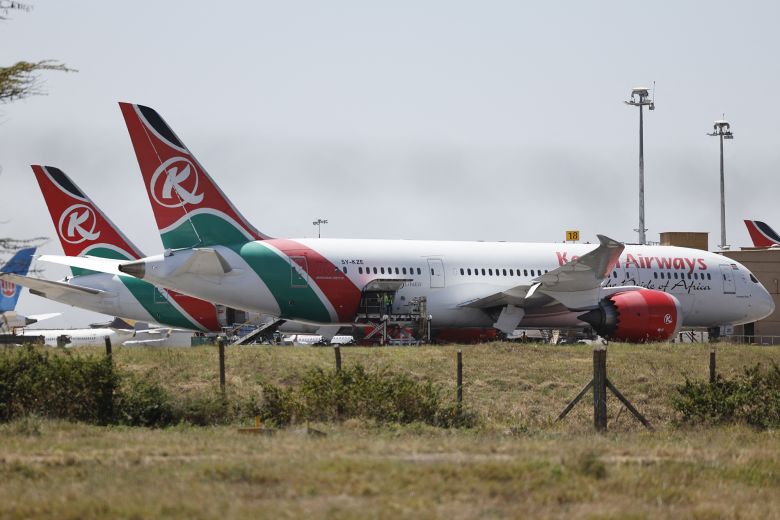
But Couch says implementation is uneven. SAATM has drafted regulations, including rules on intercontinental competition and consumer protection, which are currently being shared with countries in a ‘pilot project’ to introduce the framework to the aviation community.
“This is yielding very good results,” says Kouchi. “Over the past four years, 108 new routes have been developed.”
Coordination of visa policies between countries could also facilitate travel. SAATM is encouraging African countries to adopt visa-free initiatives, namely electronic visas and visas on arrival, to facilitate free movement within the continent, Couch said.
Currently, only Benin, Rwanda, Seychelles, Gambia and Ghana offer visa-free entry to all African passport holders, but Couch says more countries are starting to relax their visa policies.
IATA’s Apaboo said some countries were already taking flight with their aviation ambitions, highlighting Ethiopia and Rwanda.

Ethiopian Airlines, one of the continent’s oldest airlines and the largest by seat capacity, is currently seeking investors to back its $10 billion “mega airport” beyond its current home of Addis Ababa’s Bole Airport. The airport will be the continent’s largest and will initially accommodate 60 million passengers.
Rwanda Air is a new but bold move in the market. It began operating just over 20 years ago and flies to 17 routes in Africa and five overseas, including London, Paris and Dubai.
Rwanda is very committed to the SAATM initiative and has implemented measures such as visa on arrival. The new $2 billion airport is scheduled to open next year.
“The development of these airports as major hubs for the continent has encouraged investment, trade and tourism,” Appavou said, adding that East Africa, including Ethiopia, Kenya and Rwanda, is generally better connected. This is because the region exports a large amount of perishable goods and requires fast, frequent and reliable connectivity.
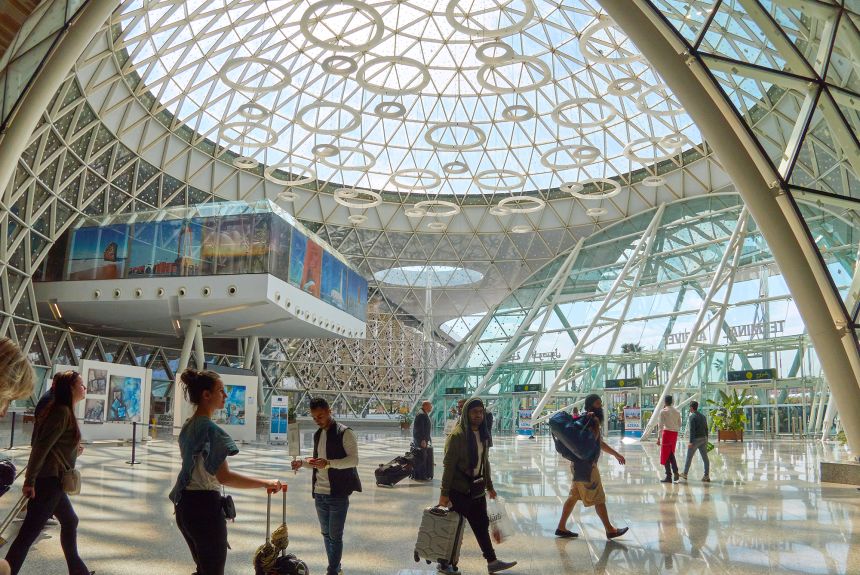
Javier Niño Pérez, Ambassador of the European Union to the African Union and the United Nations Economic Commission for Africa, said the EU is also financially and technically supporting the continent’s single aviation market ambitions.
A 5 million euro ($5.8 million) program providing expertise from the EU Aviation Safety Agency, which has been running for four years, will be renewed with an additional 10 million euros ($11.6 million), extending support until 2030.
“Based on 30 years of experience in the EU single market, we are fully aware that air connectivity is essential because it is a driver of trade, creates jobs and generates business,” Perez said.
“Air connectivity matters because it is a driver of trade, it creates jobs and it generates business.”
Javier Niño Pérez, EU Ambassador to the African Union
However, we still have a ways to go. Ongoing conflict is a challenge for the region, and the aviation sector is often neglected due to competing priorities such as food security, climate change, and universal energy access.
Despite the challenges, Peres is optimistic about the sector’s future, believing it to be “one of the most important elements” of Africa’s future political, trade and operational integration as a continent.
Appaboo agrees. He emphasizes Africa’s vast geographical scale, that flying across the continent from north to south is like traveling from New York to Istanbul, and from east to west is like traveling from Paris to Mumbai, presenting opportunities as well as challenges, and stressing that change will not happen overnight.
Regional blocs like the East African Community (ECOWAS), a collection of 15 countries in West Africa, already have economic and trade agreements, making it easier to conclude an open skies aviation agreement that could then be expanded to the continent, he said.
“When governments actually see aviation as a strategic enabler, the results go beyond the runway,” Appavou says. “It’s really synergistic.”
