


What makes a passport “powerful”? Well, the clear measure is travel generosity, the ability to slip into destinations around the world without the need for a visa by simply waving your passport in the breeze.
The Henry Passport Index is one of several rankings that measure the effectiveness of passports in this regard, and for the first time in its 20-year history, U.S. passports are completely absent from the top 10 list.
Three Asian passports currently occupy the top of the leaderboard. Singapore offers visa-free access to 193 destinations around the world. Korea, 190 accessible. And Japan has 189 people.
Meanwhile, the United States has fallen to 12th place in the latest quarterly ranking, tied with Malaysia.
Citizens of both countries will enjoy visa-free access to 180 of the 227 countries and territories tracked by the index, created by London-based global citizenship and residency advisory firm Henley & Partners and using exclusive data from the International Air Transport Association. Henry also counts multiple countries with the same score as one spot in the ranking, so the list actually includes 36 countries that beat the United States.
The US held the number one spot in 2014, and was still in the top 10 as of July this year. So what is behind this further drop in rankings?
It is due to a series of access changes. In April, Brazil withdrew visa-free entry for nationals from the United States, Canada and Australia, citing a lack of reciprocity. China has introduced more welcoming policies, such as waiving visas for European countries such as Germany and France, but the United States has not responded.
Papua New Guinea and Myanmar also adjusted their immigration policies, boosting the rankings of other passports, while the U.S. ranking fell further. The final blow came when Somalia introduced a new e-visa system and Vietnam removed the United States from its latest list of visa-free countries, according to the index’s latest report.
“The decline in the power of the U.S. passport over the past decade is not just a reshuffle in the rankings, but a fundamental shift in the dynamics of global mobility and soft power,” Christian H. Kaelin, chairman of Henley & Partners, said in a statement. “Countries that value openness and cooperation are making strides, while those resting on their past privileges are being left behind.”
British Passport, which briefly held the top spot in the index in 2015, has dropped two places since July, dropping from sixth to eighth, its lowest position on record.
While the UK and US have languished over the past decade, China has soared in the rankings, rising from 94th in 2015 to 64th in 2025, gaining visa-free access to a further 37 destinations in that time.
The Henry Passport Index report points to recent moves by China, including granting visa-free entry to Russia and new agreements with Gulf states, South America and several European countries, as examples of Beijing’s continued strategy of increasing openness.
The UAE is also one of the index’s biggest success stories, rising 34 places from 42nd to 8th place over the past decade.
At the other end of the list, Afghanistan remains at the bottom of the list at 106th place, with visa-free access to just 24 destinations, two fewer than at the beginning of the year. Syria ranks 105th (26 destinations) and Iraq ranks 104th (29 destinations).
That’s a yawning mobility gap of 169 destinations between the top-ranked and bottom-ranked passports.
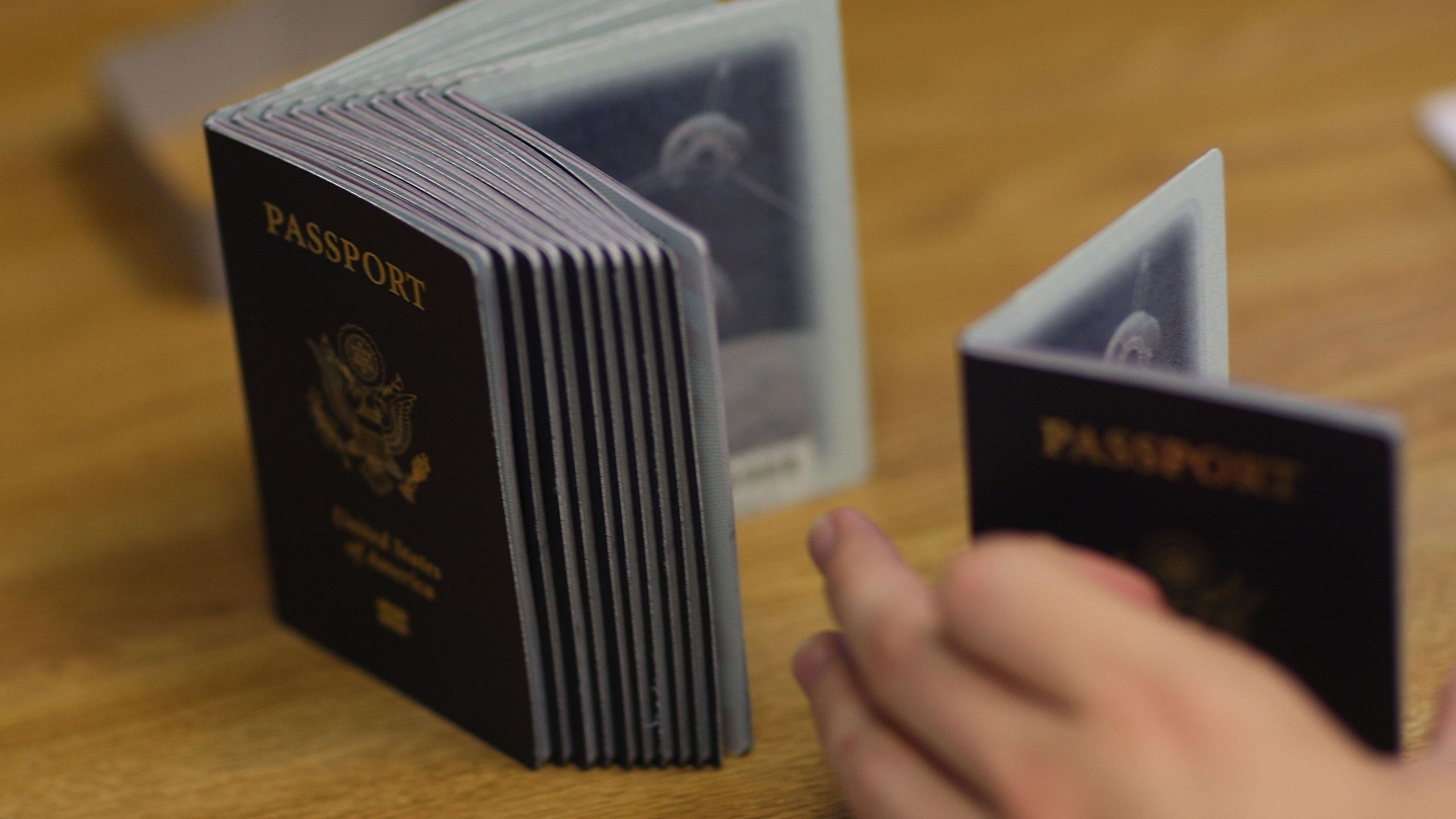
US falls behind in passport power rankings
CNN Business Editor Richard Quest commented in July 2025 on the poor performance of US passports in the index, pointing out how the opening up of travel has been affected by the introduction of new restrictions such as ESTA in the European Union and the UK.
“If you don’t mind, could you link this to the Trump administration’s immigration policy?” Quest said. “Yes, perhaps on some level there is a direct relationship between one and the other.”
But the passports at the top of the leaderboard remain highly desirable, with few restrictions overall, he added. “There are certainly citizenship rights that increase travel access and availability,” Quest said, noting that some wealthy individuals are seeking citizenship through investment schemes such as the $5 million “gold card” proposed by President Trump in February. Henley & Partners advises clients on exactly this type of residency and citizenship opportunity.
“But for the average person, it’s more than just a small difference,” Quest says. “You have a passport, you have a place to be. Learn it and live with it.”
The Henry List is one of several metrics created by financial companies to rank the world’s passports based on the access they provide to their citizens.
Arton Capital’s Passport Index takes into account passports from 193 United Nations member states and six territories: Taiwan, Macau, Hong Kong, Kosovo, the Palestinian Territories, and the Vatican. Excludes territories annexed to other countries.
It is also updated in real time throughout the year and its data is collected by closely monitoring each government portal.
Arton’s Global Passport Power Rank 2025 places the United Arab Emirates in the top spot with a visa-free/visa-on-arrival score of 179. In second place are Singapore and Spain, each with a score of 175.
Singapore (193 cities)
South Korea (190)
Japan (189)
Germany, Italy, Luxembourg, Spain, Switzerland (188)
Austria, Belgium, Denmark, Finland, France, Ireland, Netherlands (187)
Greece, Hungary, New Zealand, Norway, Portugal, Sweden (186)
Australia, Czech Republic, Malta, Poland (185)
Croatia, Estonia, Slovakia, Slovenia, United Arab Emirates, United Kingdom (184)
Canada (183)
Latvia, Liechtenstein (182)
Iceland, Lithuania (181)
USA, Malaysia (180)
