

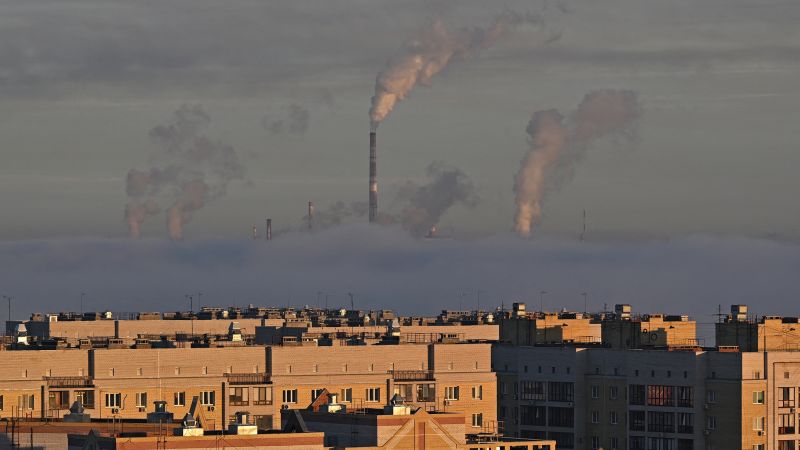
A fire broke out Saturday at a Russian oil refinery about 900 miles from the Ukrainian border. It was the third fire at the facility in the last month alone caused by a long-range Ukrainian drone attack, country security officials said.
It was just the latest episode in the escalating energy war between Ukraine and Russia.
Video from around the Ufa refinery in Bashkortostan, a Russian region south of the Ural Mountains, showed a column of black smoke rising from the factory after the attack. This refinery is one of the largest in the country.
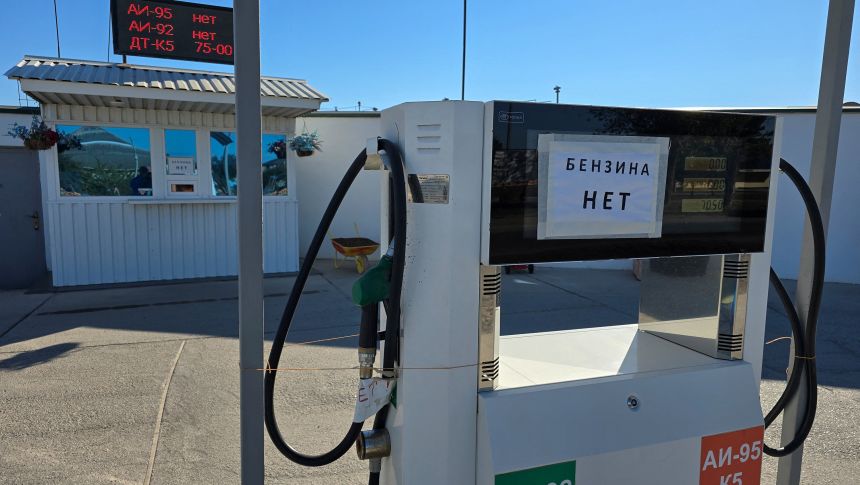
This is at least the fourth attack by Ukraine on Russian oil facilities in the past week, with attacks accelerating over the summer and leading to gasoline shortages in parts of Russia.
A gas processing facility and a pumping station in Russia’s southern Volgograd region were also attacked on Thursday night, the Ukrainian military said. Ukrainian special forces claimed that the pumping station has an annual capacity of 50 million tons.
But the energy wars go both ways. Recent barrages from Russian missiles and drones have severely damaged Ukraine’s gas production and caused widespread power outages across the country. Ukrainian officials say they will need to rely on imports of expensive European gas to make up for the shortfall.
Russia’s latest attack on Ukraine left more than 240,000 homes in southwest Odessa without power on Saturday, officials said. Ukraine’s Energy Ministry said more than 800,000 customers in Kiev were temporarily without power.
Kiev’s growing arsenal of domestically produced drones and missiles has increased its ability to attack oil refineries well over 1,000 kilometers inside Russian territory.
Last week, Ukrainian President Volodymyr Zelenskiy said Russia’s gasoline shortage was “up to about 20% (of the requirement).” He said Kiev had started using two homemade cruise missiles in recent attacks and “there are early signs of success with this particular weapon.”
Ukraine attacked Russia 70 times in September, according to Oleksandr Shirsky, the commander-in-chief of the Ukrainian military.
“We are destroying the production of fuel, lubricants, explosives and other components of the Russian military-industrial complex in the aggressor country,” Shirschiky said in a Telegram post on Friday.
However, Ukrainian authorities acknowledge that Ukraine’s gas and other infrastructure is itself under significant pressure from Russian aggression.
“There are 203 important facilities in Ukraine that need to be protected by air defense systems,” Zelenskiy said, reiterating his appeal for the expansion of Western systems.
The Ukrainian leader said he discussed the Russian attack during a phone call with US President Donald Trump on Saturday, as well as “opportunities to strengthen our country’s air defense.”
Shirsky said Ukraine’s air defenses were “about 74% effective,” but more efforts were needed to protect energy facilities.
Last week saw several large-scale attacks on Ukraine’s energy infrastructure using a combination of missiles and drones. Ukrainian officials said the Russian government launched more than 50 missiles and nearly 500 drones on October 5, and 465 drones and 32 missiles early Friday.

Ukrainian Prime Minister Yulia Sviridenko said Friday’s attack was “one of the largest concentrated attacks, especially on energy facilities.” “Unfortunately, there has been significant damage to energy infrastructure.”
Russia’s growing attack on Ukraine’s gas production means Kiev will have to seek more imports than previously expected.
According to Energy Minister Svitlana Grinchuk, Ukraine is currently negotiating with international partners to increase natural gas imports by about 30% as winter approaches.
Ukraine’s domestic gas demand typically rises rapidly starting in November.
Grynchuk said Ukraine had already arranged 800 million euros ($930 million) in loans from European institutions and was in talks to expand these loans.
Attacks on energy have very high costs. Industry sources say Ukraine is likely to need more than 4 billion cubic meters of gas by the end of winter, which will cost about $2 billion at current market prices. This is in addition to equipment to repair facilities that repeatedly suffer from fires.
Most of the additional imports will come from Europe. The European Union said last week that its storage facilities were at 83% capacity ahead of peak winter demand. So far, natural gas prices have remained stable in the European market.
