

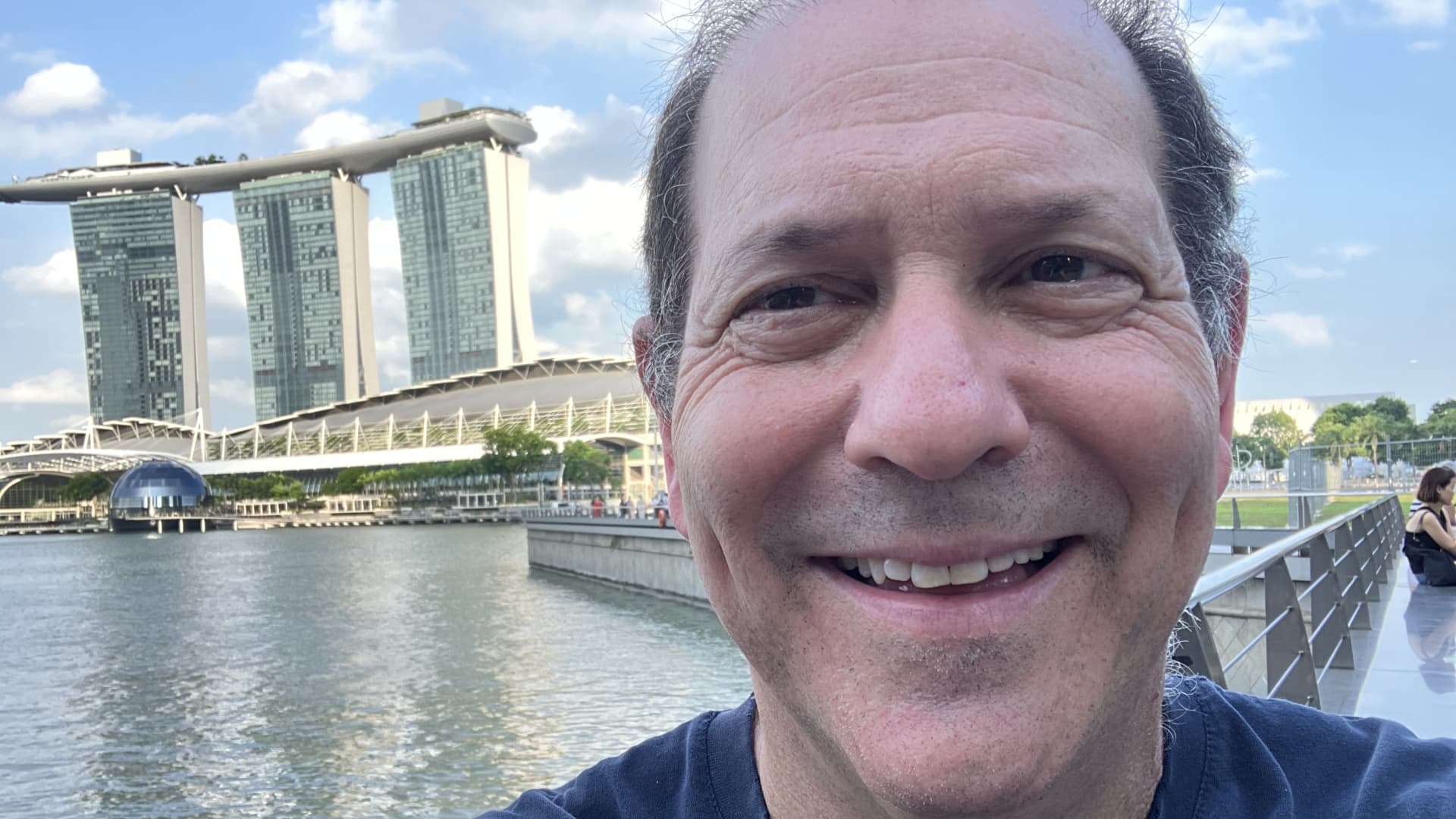
Last year, for my book Healthy to 100: How Social Bonds Lead to Longevity, I traveled to five of the world’s healthiest countries: Singapore, Japan, South Korea, Italy, and Spain to see how older adults stay active, engaged, purposeful, and healthy.
I chose these countries because they have some of the longest healthy life expectancies in the world (in some cases 10 years longer than the United States). And none of those are the most ideal environments for seniors. For example, Singapore is hot, crowded, and has a notoriously competitive work environment. Spain has high rates of obesity and smoking. If these countries can succeed, so can we.
At a community development center in Kanazawa, Japan, older adults teach, volunteer, run restaurants, and interact with young people and people with Down syndrome. In South Korea, lifelong learning is specified in the constitution. Singapore is building an entire “health district”. Italy harnesses the wisdom and energy of older people through volunteering.
Looking at how these countries are rewriting the rules on aging, I’m doing five things to live a longer, happier life.
1. Plan for the next 20 years the same way you have planned for the past 20 years.
In other countries, the definition of “old age” is fluid and tied to individual circumstances rather than an arbitrary date. At 62 years old, I can easily stay healthy for another 20 years or more, and unlike many older people, I plan to do so with the same seriousness and purpose as I have for the past 20 years.
I spent most of my early career managing people who created content. It wasn’t until I was in my 50s that I realized I was much happier telling the stories myself. In the past 10 years, I’ve written three books, hosted my own podcast, published two weekly newsletters, and started a video channel on Instagram called GrandPeople.
Our society often expects people in their 20s, 30s, 40s, and 50s to make big, intentional career plans and life plans, but we generally don’t expect as much from people over 60. But looking to the future, I’m excited to continue honing and developing my craft. Because there is no reason why the next 20 years can’t be as meaningful and purposeful as the last 20.
2. I won’t be retiring right away, but I will reconsider the way I work.
Japan has the highest proportion of older workers in the world, and many of them don’t just work for the money. They do it for purpose, connection, and well-being. Most people work part-time with flexible schedules or on job shares.
While in Japan, I met older people working on candy assembly lines, bookkeeping for machine tool companies, parking lot operations, taxi drivers, tour guides, and more.
The lessons they embodied stayed with me. I plan to continue working on my own terms while thinking about my own future. I will continue to write books and tell stories. But I probably won’t commit to publishing two newsletters a week forever. that’s ok. Instead of working full-time or retiring completely, you can find a middle ground. The goal is to continue working in a way that aligns with the life you want to lead.
3. Spend time with people of all ages
Americans don’t tend to think of intergenerational connections as a public health strategy, but people in the countries I visit understand how important this is. Research around the world shows the benefits of intergenerational relationships, including an increased sense of well-being, improved sense of well-being, and improved physical and mental health.
Even in the United States, which is said to be one of the most age-segregated societies in the world, there are opportunities for intergenerational cooperation in the workplace, neighborhoods, volunteer activities, and families.
I choose to actively find places and activities to connect with younger generations and foster friendships with people of all ages. In the future, she plans to consider moving into a combination nursing home and preschool, like Arizona State University’s Mirabella campus or Gorham House in Maine.
4. Prioritize interaction over scrolling
Americans are spending less time with friends and more time with technology. It doesn’t have to be that way. I saw for myself how Italians spend more time eating and spending time with family, and less time online.
This couldn’t be more important. Decades of research from Harvard University shows that positive relationships are the key to living a longer, happier, and healthier life, more important than career accomplishments, money, exercise, or healthy eating.
My small steps include being more intentional about family meals without my phone, and trying to cut down on the news and obsessive scrolling on Instagram that interferes with human conversation.
5. Never stop learning.
Research has demonstrated that learning supports healthy aging. Many states offer free or low-cost educational opportunities to seniors, so I plan to take advantage of them.
As you think about your next book project, you might sign up for the Osher Lifelong Learning Institute’s writing seminar for older learners. Each one is affiliated with a university, and the one closest to me is American University. We offer a wide range of classes.
No matter what classes I take or what learning I do, it is done face-to-face. Because face-to-face interaction maximizes social connections and healthy longevity.
Ken Stern is a nationally recognized expert on longevity and aging. He is the founder of the Longevity Project and hosts the Stanford Center on Longevity’s popular podcast Century Lives. His latest book is “Healthy to 100: How Strong Social Bonds Lead to Longevity.” He is also the former CEO of NPR.
Want to be your own boss? Sign up for CNBC Make It’s new online course, “Smarter by CNBC How to Start a Business: For First-Time Founders.” From testing your idea to growing your revenue, find step-by-step guidance to launch your first business. Register now using coupon code EARLYBIRD to receive an introductory discount of 30% off the regular course price of $127 (plus tax). Offer valid from September 16th to September 30th, 2025.

