

More than 660 million people around the world remain without access to electricity, 85% of whom live in sub-Saharan Africa.
Vashikala Malango was one of them.
Malango was born and raised in Baraka, a village on the shores of a vast lake in the Democratic Republic of Congo (DRC). According to the World Bank, approximately 78% of the country’s population still lacks access to electricity.
He recalls spending mornings at school, afternoons playing soccer on the street, and returning home at dusk to share the light of a kerosene lamp in the kitchen where his mother was preparing dinner.
I couldn’t read or study in the evening. “We couldn’t even buy enough kerosene to have enough light until 9 or 10 p.m. Then we would spend the rest of the night in darkness,” he recalls. One night, when the candle remained burning for several hours, the cotton mattress caught fire and he woke up gasping for breath with a mouthful of smoke.
Malango and his childhood friend Ionwa Mashangao fled Baraka in the mid-1990s during the Congolese civil war. The teenagers ended up together in a refugee camp in Tanzania, where there was also no electricity.
“We relied on dirty and expensive energy sources for lighting, powering appliances, and learning, which had a very negative impact on our household income and health,” Malango said. These early experiences led Malango and Mashangao to launch Artek in 2013, a startup that provides easy-to-install home solar kits to provide reliable power to off-grid communities.
“Given what we experienced as children, we really wanted to contribute to eradicating energy poverty in the DRC,” says Marango.
Africa, made up of 54 countries, has more hours of sunshine than any other continent. Solar irradiance (the sun’s power per square meter) is among the highest in the world, and solar energy potential is “nearly limitless,” according to the African Development Bank.
Solar power has been touted as the obvious solution to providing clean energy to millions of people living without electricity.
But the continent will have just 21.5 gigawatts of installed solar power capacity by 2024, according to the International Energy Agency. By comparison, China, the world leader in solar power, added 198GW between January and May this year alone.
What’s holding back solar power in Africa?
“The problem that many African countries have is that their populations are sparsely populated and dispersed,” said Bruno Idini, an analyst at the International Energy Agency.
Issues vary by country, but national power grids often struggle to extend beyond cities due to high infrastructure costs and bottlenecks, regulatory hurdles, unclear government policy, and, in some cases, conflict and insecurity.
When it comes to solar power, these issues are further complicated by the high upfront costs of large farms.
Multinational projects aim to address these challenges, such as the Mission 300 initiative, in which 29 countries have committed to policy changes to improve regional energy access, connecting 30 million people to date.
One of the most ambitious projects is the African Development Bank’s Desert to Power Initiative, launched in 2018. The project aims to deploy and benefit 10 gigawatts of solar power to 11 countries in the Sahel region (Burkina Faso, Chad, Djibouti, Eritrea, Ethiopia, Mali, Mauritania, Niger, Nigeria, Senegal and Sudan) by 2030. 250 million people.
But more than halfway through the project schedule, only a fraction of the solar capacity has been funded. Progress has been hampered by civil unrest, including five coups in three years, and six of the 11 project countries are listed as conflict-affected by the World Bank in 2024.
Over the past two decades, Africa has accounted for only 2% of global investment in renewable energy, despite being rich in untapped renewable resources.
The IEA estimates that achieving universal electricity access on the continent by 2030 will cost $25 billion a year. Investment in renewable energy, particularly in the private sector, is increasing in Africa, but it is still falling short of the investment needed to reach its renewable energy goals.
According to the IEA, distributed solar power is expected to account for 42% of solar power expansion over the next five years, although utility-scale solar power still dominates the sector.
Heimi Bahar, senior renewable energy market analyst at the IEA and lead author of the agency’s renewable energy report, said these home solar systems and mini-grids “could act as a bridge while we wait for the grid to be installed.”
Dropping costs have made solar power a “no-brainer” for many households compared to diesel generator fuel, Bahar said. However, he added that the initial upfront capital required for solar power remains a barrier. It is estimated that only 22% of households without electricity can afford a ‘Tier 1’ solar power kit, which is equivalent to four hours of electricity each day. Therefore, government policy, venture capital and seed funding environment play a key role in promoting the adoption of solar power, it added.
“Without assistance from governments, either in terms of loans or microfinance systems, it is very difficult for many people in Africa to pay all this upfront,” Bahar says.
The biggest barrier for investors in off-grid projects is “if or when the grid is going to come, because you don’t want to invest in large scale off-grid infrastructure and then expect the grid to come two years later,” Bahar said. Clear policies and transparent planning can “de-risk” these projects and attract external funding, he added.
Meanwhile, startups like Altec are thriving. The company’s business model allows customers to pay for solar kits over several months rather than upfront. According to the United Nations, the average daily income in the DRC is $3.92, making even the seemingly small $13 advance payment for a solar lamp unaffordable, Malango said.
Altech introduced mobile payments in 2022 to facilitate pay-as-you-go solar kits, from entry-level lighting systems that cost about 50 cents a day for 100 days to more comprehensive “power systems” that include products such as induction cooktops and freezers that cost $1 a day for five years.
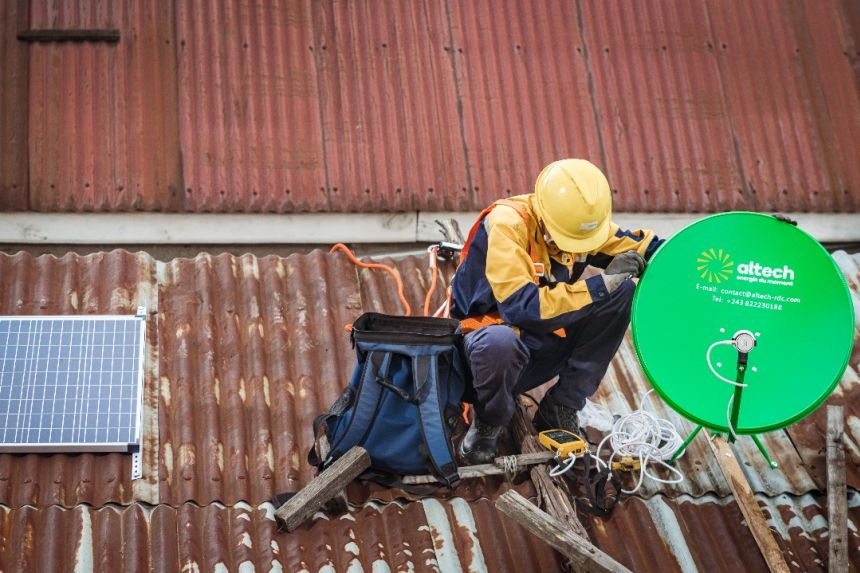
Malango said the most popular residential solar power system includes two 50-watt solar panels designed to support a TV, radio, soundbar, fan, cell phone charger and two light bulbs, and costs about 50 cents a day, paid over three years.
Without a solar power system, households would spend hundreds of dollars a year purchasing kerosene canisters to support basic lighting and cooking needs.
Malango said the most popular solar home systems include two 50-watt solar panels designed to support a TV, radio, soundbar, fan, cell phone charger and two light bulbs. For larger systems, customers make a small down payment and pay the rest over two to five years.
These off-grid solar power systems not only save you money but also improve your quality of life. Reliable lighting allows children to study at night and improve their academic performance, and allows households to reduce exposure to harmful pollutants from kerosene and the negative health effects of accidental fires and smoke inhalation.
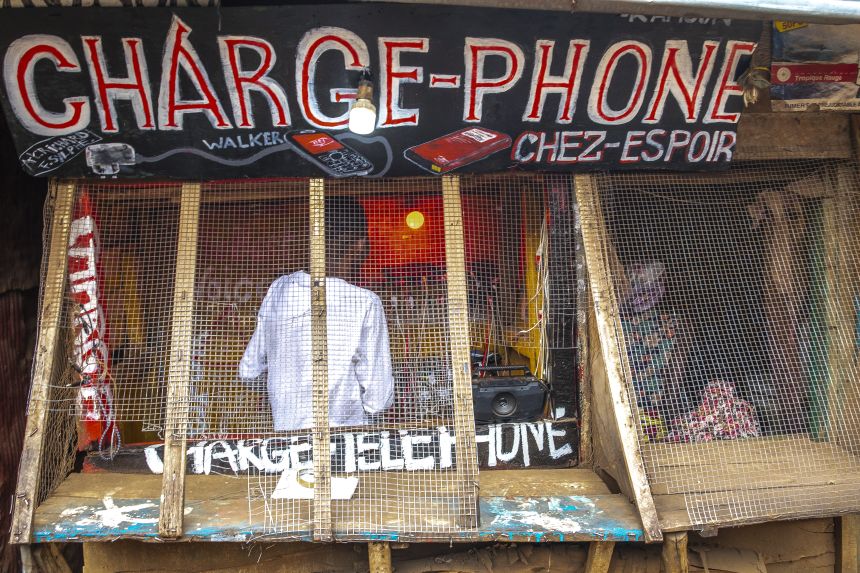
Even something as small as charging your phone will become infinitely easier and cheaper, Malango says. People typically go to charging shops powered by diesel generators and spend $1 to $3 to charge their phones, but they can also get lost or stolen while charging.
“Being able to charge at my location whenever I want is a big help,” Malango added. To date, the company serves more than 2.5 million people in the Democratic Republic of Congo.
Distributed energy solutions like Altech are becoming increasingly important in the pursuit of energy equity.
According to the IEA, from 2020 to 2022, around a quarter of sub-Saharan Africa’s electricity connections were provided by off-grid solar PV systems.
Other companies across the continent are also trying to fill gaps in the main power grid. Kenyan startup M-Kopa was one of the first to enter the pay-as-you-go solar space in 2011 and has since successfully expanded its business into digital finance, smartphones and e-mobility.
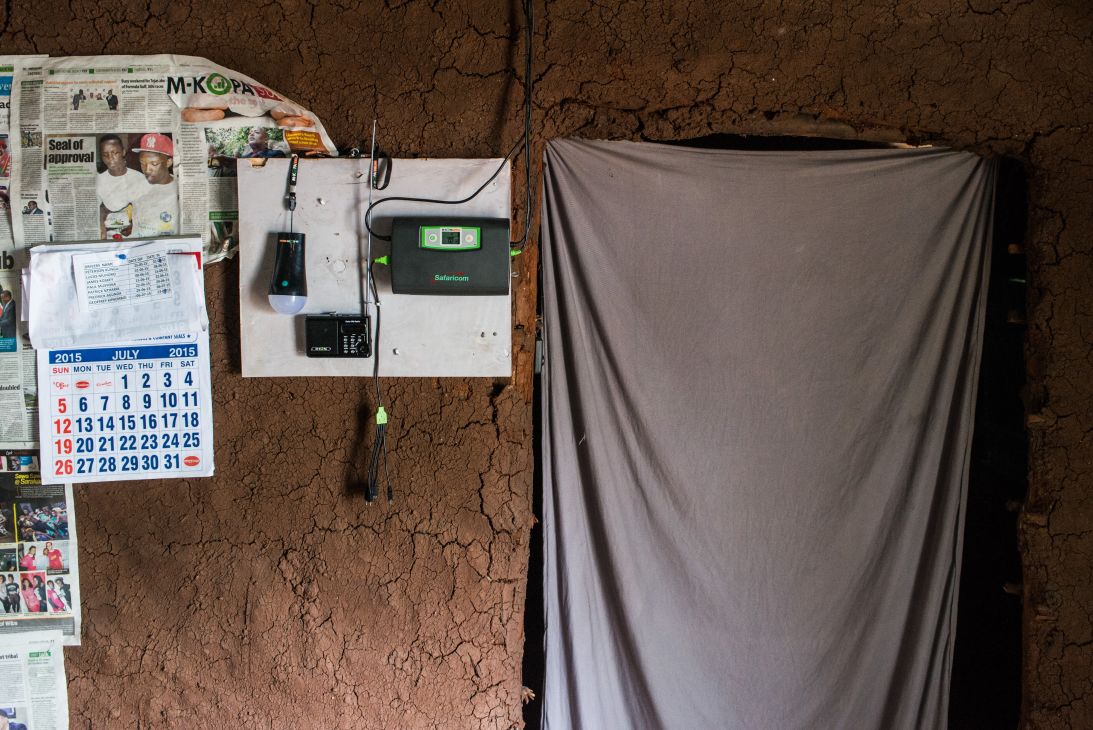
Izili (formerly Baobab+) has raised more than $21 million for its operations in Nigeria, Senegal, Madagascar, and Ivory Coast, providing solar kits and off-grid cookstoves to 2 million people and growing. In South Africa, LightBox Africa offers solar kits with micro-loans that are repaid over three years.
And Nuru, a Congolese startup that means “light” in Swahili, focuses on solar mini-grids for remote communities. In 2023, it has secured $40 million to build sub-Saharan Africa’s largest mini-power grid.
IEA analyst Idini said these off-grid energy solutions often provide “first access to African households” and could help provide opportunities for the next generation, given the continent’s large young population, with 70% of sub-Saharan Africans under the age of 30.
“It’s like a vicious cycle: You can’t pay for electricity, so you don’t have electricity, and you don’t have electricity, so you can’t pay for electricity,” Idini said. “This is where solar home systems and mini-grids can play a huge role.”
