

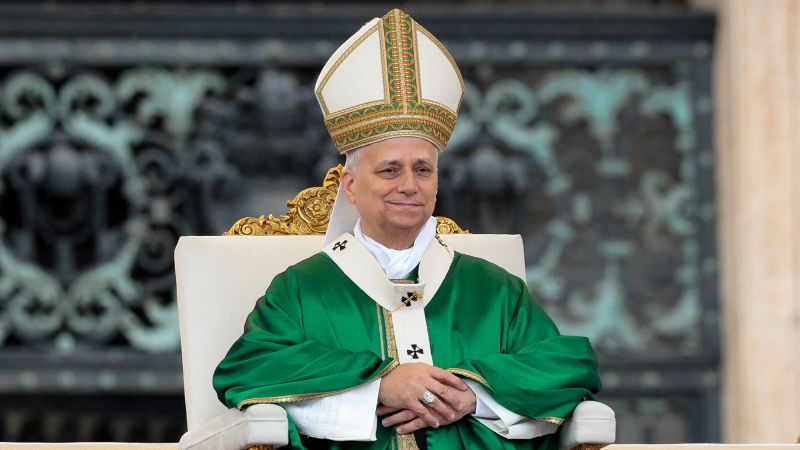
Pope Leo XIV is scheduled to visit Turkey and Lebanon in his first overseas trip, where he is expected to focus on peace in the Middle East, meet political leaders and show support for Christians in the region.
The first American pope will visit Turkey from November 27th to 30th, followed by Lebanon from November 30th to December 2nd. While in Turkey, the pope will commemorate the 1700th anniversary of the Council of Nicaea, an important church gathering that defined Christian beliefs. The Nicene Creed is still recited in churches around the world. According to the Vatican, Leo will travel to the town of Iznik (now Nicaea) for the anniversary and, while in Turkey, will meet with Ecumenical Patriarch Batlomeus, the spiritual leader of the Eastern Orthodox Church of some 300 million people.
Leo told reporters in Castel Gandolfo that his visit to Lebanon would be an opportunity to bring “a message of peace to the devastated Middle East,” adding that he wanted to emphasize “peace and hope” during his time in Lebanon.
The pope spoke to reporters outside Villa Barberini, where he is staying during a visit to the Vatican residence in Castel Gandolfo, a town about 26 miles southeast of Rome.
Leo explained that his visit to Turkey will focus on celebrating the anniversary of the Council of Nicaea, which will be a “moment of true unity of faith” for all Christians. “We must not miss this historic moment,” he said. “But it’s not about looking back, it’s about looking forward.”
The Vatican said Leo had been invited to visit Türkiye and Lebanon by civil and church leaders from both countries. Both are places Pope Francis had planned to visit even before his health problems. Lebanese President Joseph Aoun, a Maronite Christian, invited Leo to visit the country when he met with the Pope at the Vatican in June. Lebanon is home to an important Christian community, mainly Maronites, and the Vatican has been paying close attention to the country’s political difficulties. In August, Mr. Leo delivered a message at a memorial service for the 200 people killed in the 2020 Beirut port explosion, and plans to pay tribute to the victims while in Lebanon.
The detailed itinerary for the visit has not yet been announced, but the trip abroad is an opportunity for the pope to exercise soft power by addressing the country’s political leaders and meeting with church leaders and leaders of various faiths, while supporting local Catholic communities.
“We welcome this historic event with great joy and renewed hope,” Lebanon’s Catholic Council of Patriarchs and Bishops said in a statement. “We hope that the Apostle’s visit to Lebanon will bring peace and stability and be a sign of unity for all Lebanese, Christians and Muslims alike, at this important stage in our country’s history.”
Meanwhile, Patriarch Bartholomew’s advisor, the Reverend John Krisabgis, told Reuters that Leo’s visit showed that Leo was “trying to express and affirm his Christian identity in a world of different creeds, where all people, regardless of religion or race, are called to live together in mutual understanding.”
In comments outside the Barberini residence, Leo spoke about the second anniversary of the Oct. 7 attack on the Israeli community by Hamas, saying efforts must be made to reduce hatred in the world and the role of the church is to foster dialogue and seek peaceful solutions.
“We need to think about how much hate there is in the world and start asking ourselves what we can do about it,” Leo said, adding that anti-Semitism was “alarming.”
The Pope also responded to the Holy See’s Embassy in Israel, which accused the Vatican’s top diplomat of “questionable use of moral equivalence” in an Oct. 7 anniversary interview. Cardinal Parolin described the Hamas attack as an “inhuman massacre” but also said Israeli forces were carrying out “ongoing genocide” in Gaza.
“The cardinal expressed the opinion of the Holy See very well,” Leo said.
