

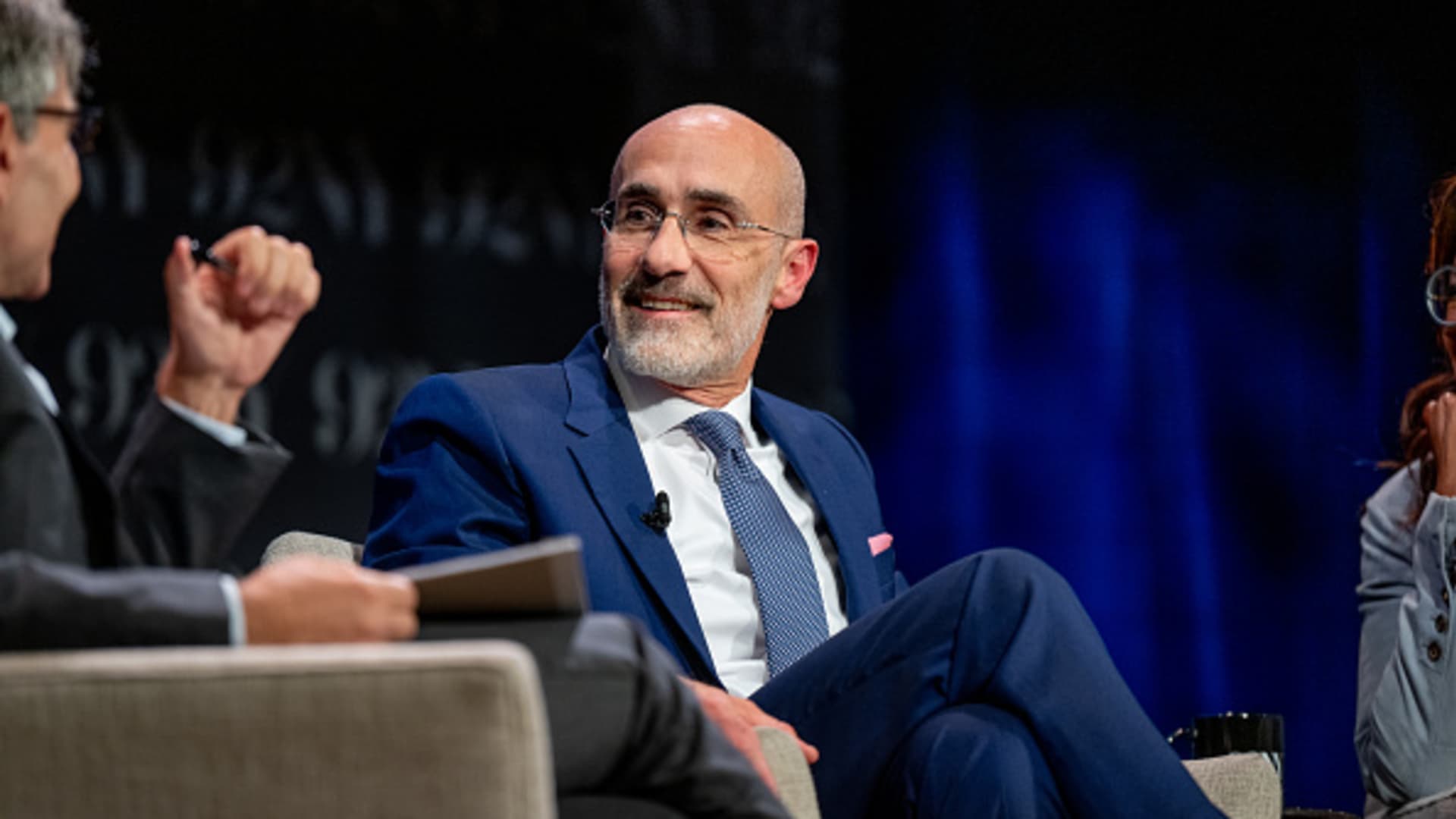
The most successful people have a morning routine that helps them live a great life. Data shows that how you start your day can have a huge impact on your energy, creativity, and sense of well-being.
Arthur Brooks, a professor who teaches a class on managing happiness at Harvard University and writes a column on happiness for The Atlantic, has a series of habits you can choose each morning to boost your mood for the rest of the day.
“I used all of my background in behavioral science and everything I learned about biology to put together a morning routine that boosts my health,” Brooks said on his podcast, “Office Hours with Arthur Brooks.”
This is Brooks’ morning routine, something he says we can all do to “start our day in the best way possible.”
Arthur Brooks’ 6-step morning routine
To better understand himself, Brooks used a psychological tool called the Positive and Negative Affect Schedule (PANAS) to determine his basic emotional state. After taking the test, people are placed into one of four categories depending on how strongly they lean towards positive or negative emotions.
Brooks would be considered a “mad scientist” who experiences high positive emotions and high negative emotions. “I feel things very intensely, and that’s great on the good side, but you have to manage the bad side,” he said on the podcast.
To prevent the intensity of negative emotions from impacting your quality of life, Brooks created the following six-step morning routine.
Wake up before dawn: Studies have shown that waking up before the sun improves creativity, concentration and memory, he said. Brooks wakes up at 4:30 a.m. most days and has experienced positive effects on her mental health as a result. Engage in physical activity: “I’m at the gym 15 minutes after I wake up,” says Brooks, who has a gym at home. He works out for an hour a day, seven days a week, alternating between cardio and strength training. Reaching Metaphysics: Taking a page from the Dalai Lama’s book, Brooks said he practices his own version of analytical meditation and “regulates the workings of his soul” by attending Mass and praying a Catholic meditation in his car every morning. Even if you’re not religious or interested in meditation, 20 to 30 minutes of journaling can have similar benefits, Brooks added. Delay your coffee intake: “I certainly love coffee, but I don’t drink it when I first wake up,” he said. “Actually, I don’t have my first coffee until 7:30 in the morning.” He finds that this helps him avoid falling into a 3 p.m. slump later in the day. Eat a high-protein breakfast: Brooks consumes 175 to 200 grams of protein each day, so for breakfast she gets about 60 grams of unflavored fat-free Greek yogurt with whey protein, walnuts, and berries. “I feel great. It keeps me full and energized all morning,” he said. Enter a flow state: Instead of using the energy from her morning routine to check her email, make a phone call, or read the newspaper, Brooks gets right to work. “That way you actually get two hours of really high-quality creative work,” he said. “The rest of the day I’m in the flow.”
Brooks encouraged listeners to try the morning protocol, but also suggested modifying it to suit personal experience.
“Try experimenting for yourself,” he said. “This is the result of my experiment. You need the result of your experiment.”
Want to level up your AI skills? Sign up for CNBC Make It’s new online course, “How to use AI to better communicate at work by Smarter by CNBC Make It.” Get specific prompts to optimize your emails, notes, and presentations for tone, context, and audience. Register now using coupon code EARLYBIRD and receive a 20% off introductory discount. Offer valid from October 21st to October 28th, 2025.
Plus, sign up for the CNBC Make It newsletter for tips and tricks to succeed at work, money, and life, and request to join our exclusive community on LinkedIn to connect with experts and colleagues.

